

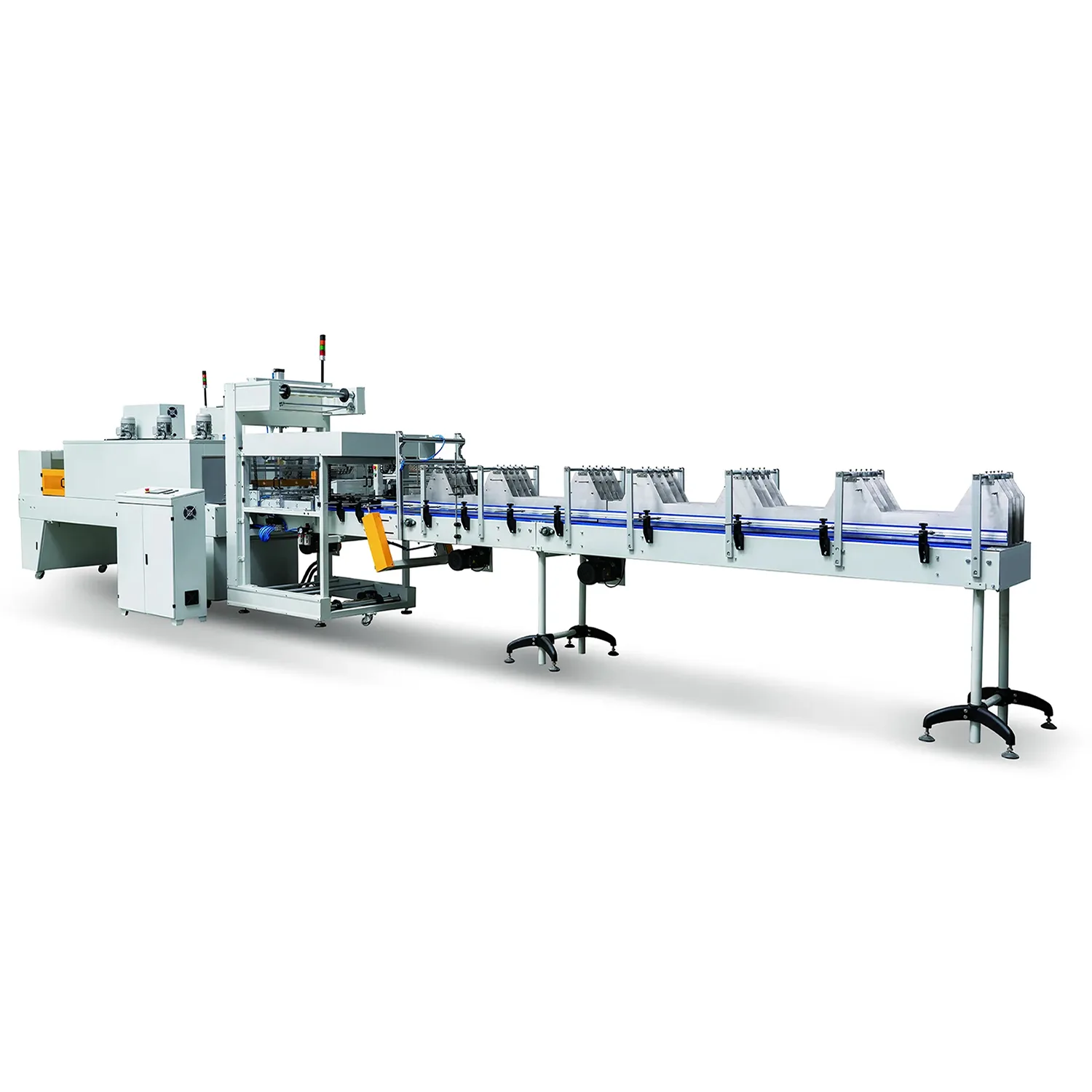
يمكن لخط تعبئة المشروبات أن يقوم بعمليات التعبئة والإغلاق بشكل نظيف ومع ذلك يتكبد خسائر مالية في مرحلة وضع الملصقات. إذا لم تتمكن آلة وضع الملصقات من الحفاظ على دقة ±1 مم بنفس معدل الزجاجات في الساعة الذي تحققه آلة التعبئة، فستحصل على أكمام مجعدة، أو أغلفة OPP مائلة، أو مخزن مؤقت يتوقف باستمرار عن العمل. إن وضع الملصقات ليس مجرد زينة يتم تثبيتها في النهاية، بل هي المحطة التي تحول الزجاجة المعبأة إلى منتج قابل للبيع يحمل العلامة التجارية والباركود والمعلومات القانونية.
يشرح هذا المقال دور آلات وضع الملصقات في إنتاج المشروبات المعبأة وكيفية مطابقة نوع الآلة مع شكل الزجاجة وسرعة الخط ومادة الملصق. تقوم SinoPAK بتصنيع معدات وضع الملصقات لخطوط المياه والعصائر والمشروبات الغازية وخطوط PET / الزجاج ذات الصلة. ابدأ من نطاق آلات وضع الملصقات.
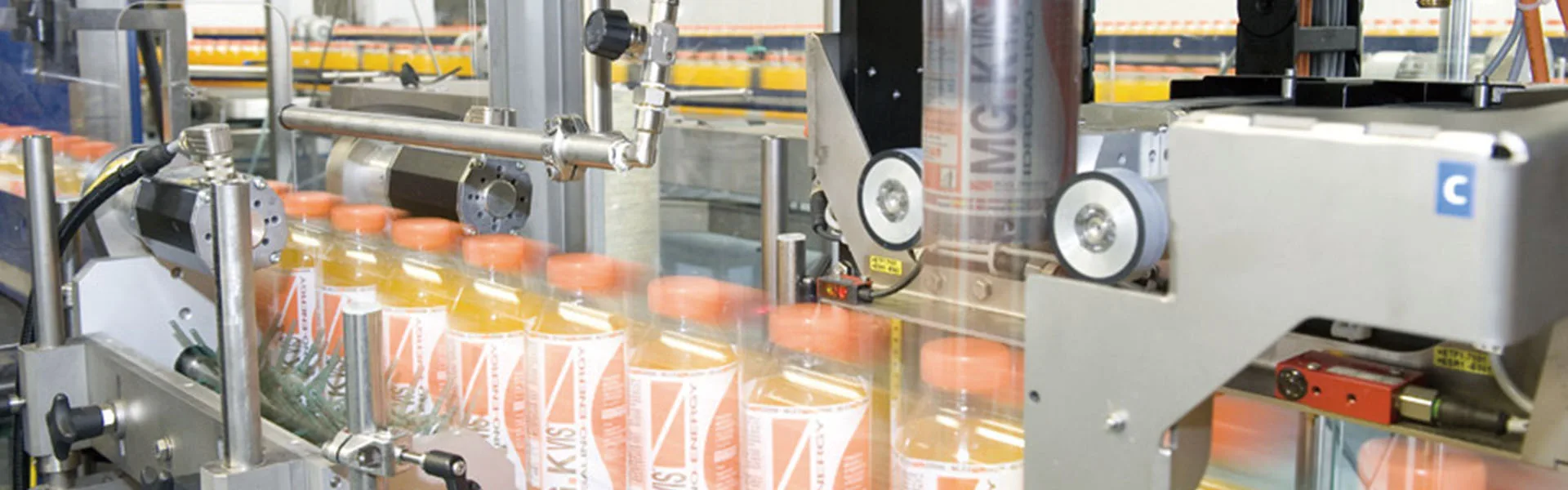
موقع آلة وضع الملصقات في خط التعبئة
في خط تعبئة المياه أو المشروبات الغازية المعتاد باستخدام PET، تبدأ السلسلة من نفخ القوالب أو تغذية الزجاجات، مروراً بالشطف والتعبئة والإغلاق، ثم وضع الملصقات، والترميز الاختياري، وأخيراً التغليف بالانكماش أو التعبئة في كرتون. بعد الإغلاق، تكون الزجاجة مغلقة ولكنها لا تزال مجهولة الهوية. تقوم آلة وضع الملصقات بتطبيق الفيلم أو الورق الذي يتعرف عليه المتسوقون وتجار التجزئة.
هذا الموقع يفرض ثلاث مهام في وقت واحد. يجب أن تتطابق آلة وضع الملصقات مع سرعة آلة التعبئة حتى لا يعاني الناقل من نقص أو تكدس، وأن تحافظ على دقة التموضع بما يكفي لماسحات الباركود ومعايير العلامة التجارية، وأن تتعامل مع هندسة الزجاجة التي تستخدمها فعلياً - سواء كانت PET مستديرة، أو زجاج، أو عبوات مربعة، أو رسومات تغطي كامل الجسم. تدمج SinoPAK عملية وضع الملصقات ضمن حلول متكاملة للمياه والعصائر والمشروبات الغازية بدلاً من التعامل معها كجهاز منفصل. إذا كنت تحدد مواصفات خط كامل، فراجع خط تعبئة المياه وتأكد من مناقشة معدل الزجاجات في الساعة (BPH) لآلة وضع الملصقات بالتوازي مع آلة التعبئة.
ما تفعله آلات وضع الملصقات فعلياً لعلامات المشروبات التجارية
في مصانع المشروبات، تحمل آلات وضع الملصقات رسومات العلامة التجارية، ولوحات التغذية أو المكونات، وباركود التجزئة. كما أنها تحمي هوامش الربح. يُستخدم وضع ملصقات فيلم OPP على نطاق واسع في زجاجات المياه والمشروبات الغازية المستديرة لأن تكلفة الفيلم وتكلفة التشغيل أقل من العديد من خيارات الورق أو الأكمام الكاملة عند الإنتاج بكميات كبيرة.
من حيث العملية، يتم التحكم في آلة وضع ملصقات المشروبات الحديثة بواسطة PLC، وهي مرتبطة بخلايا ضوئية عند التغذية والتفريغ، ومضبوطة لقص أو تطبيق الفيلم بدقة تصل إلى المليمتر. تبلغ دقة وضع الملصقات في وحدات OPP ذات الصهر الساخن الخطية من SinoPAK ±1 مم بكفاءة ≥99.5% عبر الطرازات المخصصة للزجاجات المستديرة. هذا هو مستوى الأداء الذي يجب أن يطلبه المشترون عندما تعمل آلة التعبئة بالفعل بآلاف الزجاجات في الساعة.

أنواع آلات وضع الملصقات الرئيسية المستخدمة في خطوط المشروبات المعبأة
يغطي كتالوج SinoPAK التنسيقات التي تشتريها مصانع المشروبات في أغلب الأحيان. اختر بناءً على المظهر الرسومي وشكل الزجاجة والسرعة، وليس بناءً على الصورة التي تبدو الأحدث.
| نوع آلة وضع الملصقات | الأنسب لخطوط المشروبات | نطاق سرعة SinoPAK المعتاد | تنبيهات |
|---|---|---|---|
| OPP خطية بالصهر الساخن | زجاجات المياه والمشروبات الغازية المستديرة (PET / زجاج) التي تحتاج إلى ملصقات ملفوفة بكميات كبيرة | حوالي 6,000–12,000 زجاجة في الساعة (سلسلة LOPP) | مصممة للأجسام الأسطوانية؛ يحتاج نظام الغراء إلى تحكم مستقر في الهواء والحرارة |
| OPP دوارة | تشغيل مستمر أعلى على زجاجات PET المستديرة حيث يساعد التعامل الدوار على الاستقرار | عمل OPP عالي السرعة متوافق مع الخط | بصمة أكبر وانضباط أكثر صرامة في تغيير الإعدادات مقارنة بالوحدة الخطية البسيطة |
| أكمام الانكماش (Shrink sleeve) | رسومات تغطي كامل الجسم أو جزء منه على PET، الزجاج، العلب، والأعناق ذات التشكيلات | حوالي 6,000–18,000 زجاجة في الساعة (سلسلة SL) | تحتاج إلى سعة نفق بخار؛ يجب أن يتوافق اختيار فيلم PVC / PET / OPS مع قواعد السوق |
| ذاتية اللصق (حساسة للضغط) | ملصقات أمامية / خلفية / للعنق، عبوات مسطحة أو مربعة، تشغيل متعدد المنتجات بسرعة متوسطة | حوالي 3,000–15,000 زجاجة في الساعة حسب الطراز | غالباً ما تكون تكلفة الملصق لكل زجاجة أعلى من فيلم OPP عند إنتاج المياه بكميات كبيرة |
OPP بالصهر الساخن للزجاجات المستديرة ذات الإنتاج الكبير
بالنسبة للمياه المعدنية والعديد من زجاجات المشروبات الغازية المستديرة، تعتبر آلة OPP الخطية بالصهر الساخن هي الخيار الأساسي. تستهدف آلة وضع الملصقات الأوتوماتيكية الخطية OPP بالصهر الساخن من SinoPAK الحاويات الأسطوانية المصنوعة من الزجاج أو المعدن أو البلاستيك، مع مواد ملصقات OPP أو BOPP أو الورق وأقطار زجاجات تتراوح تقريباً بين 40–110 مم حسب الطراز. تشمل خطوات السرعة 6,000 و9,000 و12,000 زجاجة في الساعة. تتزامن الآلة مع إشارات تغذية الزجاجات بحيث تتباطأ عندما يتراكم التفريغ وتتسارع عندما يكون التدفق واضحاً - وهو بالضبط ما تريده بعد آلة التعبئة. عندما يفضل التعامل الدوار لزجاجات PET، استخدم آلة وضع ملصقات OPP من النوع الدوار لزجاجات PET.
أكمام الانكماش عندما تحتاج العلامة التجارية إلى تغطية كامل الجسم
Sleeve labeling wraps the container, then shrinks the film with steam. It covers contoured bottles and supports full-panel graphics that wrap labels cannot match. SinoPAK’s automatic shrink sleeve labeling machine lists body diameters about ∅28–125 mm, label lengths 30–250 mm, films PVC, PET, or OPS, and model speeds from 6,000 BPH up to 18,000 BPH. It can run stand-alone or in-line with filling speed.

Budget the steam tunnel, not only the sleeve applicator. SinoPAK’s SL series pairs the host with a steam shrinking section whose steam demand rises with speed, about 20–50 kg/h across the published models.
Self-adhesive when SKUs and shapes keep changing
Pressure-sensitive labeling fits plants that run flat, square, or multi-panel applications—front and back, neck, sometimes cap top. SinoPAK’s automatic linear self-adhesive labeling machine quotes speed options from 3,000 to 15,000 BPH with about ±1 mm precision. It is a practical choice for specialty drinks, smaller batches, or packs that share a beverage factory with cosmetics-style formats. For pure high-volume round water, OPP film usually wins on label cost.

Why Labeling Becomes the Bottleneck
Buyers often size the filler first and treat labeling as an afterthought. That fails when an 18,000 BPH filler is paired with a sleeve unit that cannot keep up without the matching steam tunnel, when round-bottle OPP is ordered for a square juice pack that needs self-adhesive or sleeve, when changeover time between 500 ml and 1.5 L is ignored in the shift plan, or when glue temperature and label roll quality drift until scrap exceeds the filler’s reject rate. Treat labeling as a capacity-critical station. Match BPH, bottle diameter range, label height, and film type in the same RFQ as the filling monoblock.
How to Spec a Beverage Labeler Without Wasting the Quote Cycle
Send the beverage type (water, juice or tea, CSD, beer, or other), bottle material and shape drawings with min and max diameter and height, target speed in BPH, and whether the labeler must track an existing filler. State the label format—OPP wrap, shrink sleeve full or partial, or self-adhesive panels—plus label size, thickness, and material (OPP, BOPP, paper, PVC, PET, or OPS). Add utility limits for power, air (OPP lines often need about 0.5 MPa), and steam for sleeves. With that brief, a supplier can return a model from the LOPP, SL, rotary OPP, or self-adhesive family instead of a generic “labeling machine” price.
الأسئلة الشائعة
What is the role of a labeling machine in bottled beverage production?
After filling and capping, the labeling machine applies brand, legal, and barcode information so the bottle can enter packing and retail. On a SinoPAK-style line it also has to track filler speed; if it cannot, scrap and stoppages show up even when the monoblock itself is healthy.
Which labeling machine should I choose for PET water bottles?
For high-volume round PET water, start with OPP hot-melt—linear for common 6,000–12,000 BPH wraps, or rotary OPP when you want continuous PET handling at higher duty. Choose shrink sleeve only when you need full-body or contoured graphics. Self-adhesive is better for front/back panels or non-round packs than for mass round water.
Can the labeling machine run at the same speed as the filling machine?
Yes, if you size it that way. SinoPAK’s shrink sleeve models publish about 6,000–18,000 BPH and OPP linear models about 6,000–12,000 BPH, with infeed signal control so the labeler slows or ramps with bottle flow. Always quote the filler BPH and bottle diameter together so the labeler is not undersized.
What labeling accuracy should beverage plants expect?
SinoPAK’s linear OPP and self-adhesive units list about ±1 mm placement accuracy. That window matters for barcode scanners and brand face standards on high-speed water and soft-drink lines.
Do shrink sleeve labelers need extra utilities?
They do. Beyond the sleeve applicator, you need a steam shrinking tunnel. SinoPAK’s SL series pairs the host with a steam section that can draw roughly 20–50 kg/h of steam depending on model speed, so plant steam capacity belongs in the RFQ.
Can one labeling machine handle several bottle sizes?
Within the published diameter and label-height range, yes—change parts and setup time still apply. SinoPAK OPP linear models cover roughly 40–110 mm bottle diameters depending on model; shrink sleeve covers about ∅28–125 mm. Put your min/max bottle drawings in the inquiry before assuming one machine covers every SKU.
خلاصة عملية
On bottled beverage lines, labeling machines finish the product for the shelf and protect line OEE. For high-volume round PET water and soft drinks, start with OPP hot-melt, linear or rotary. Move to shrink sleeve when full-body graphics or complex contours are required. Use self-adhesive when shapes and panel layouts keep changing or speeds sit in the mid range.
Next step: send bottle drawings, target BPH, and preferred label material to SinoPAK and ask for a matched proposal from the labeling machine category, sized to your filler—not to a stock photo.