

 người Pháp
  Tiếng Tây Ban Nha
  Português
  Ả rập
Ả rập When discussing bottled water production, the treatment process is the most critical step in ensuring product safety and quality. In practice, a well-designed bottled water treatment process not only removes impurities but also ensures consistent taste and compliance with hygiene standards. For manufacturers, understanding this process is essential for building an efficient and reliable bottled water production line.
Overview of the Bottled Water Production Process
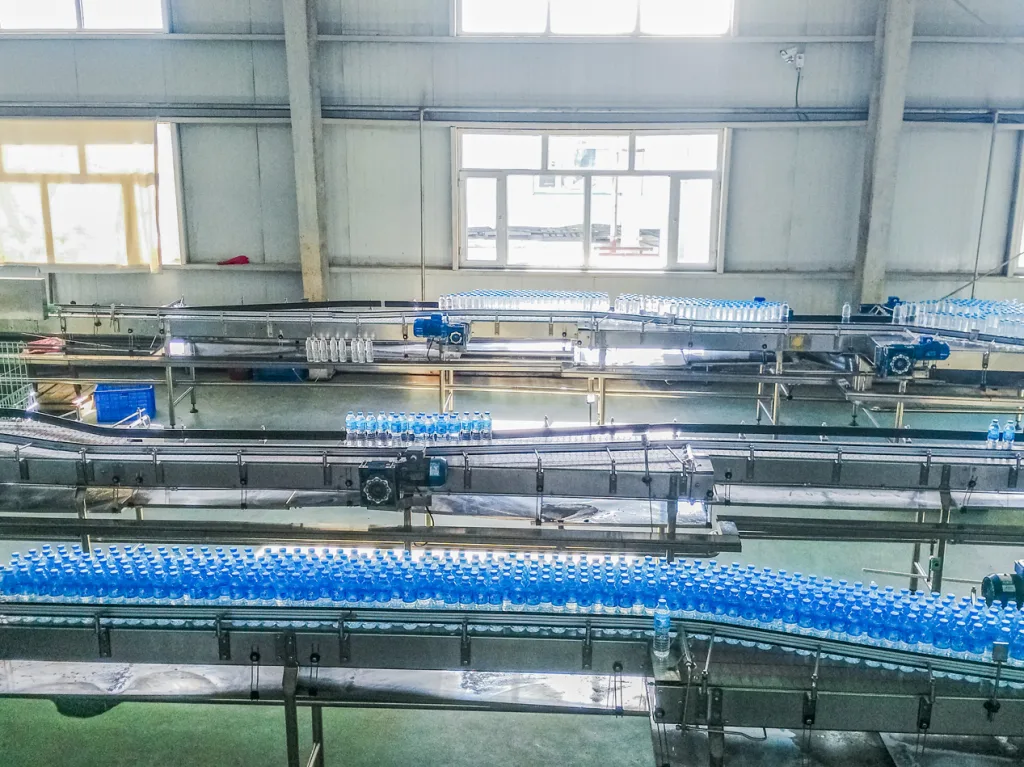
To begin with, bottled water production is more than just purification. It is a complete system that includes water sourcing, treatment, bottle production, filling, and packaging. Among these stages, the water purification system plays a central role, as it directly determines the final product quality. A typical process follows the sequence: water source → treatment → bottle blowing → filling → packaging.
Water Source Selection and Collection
At the initial stage, choosing the right water source is essential. Common sources include spring water, groundwater, and municipal water. Each type has different characteristics, which means the bottled water treatment process must be adjusted accordingly.
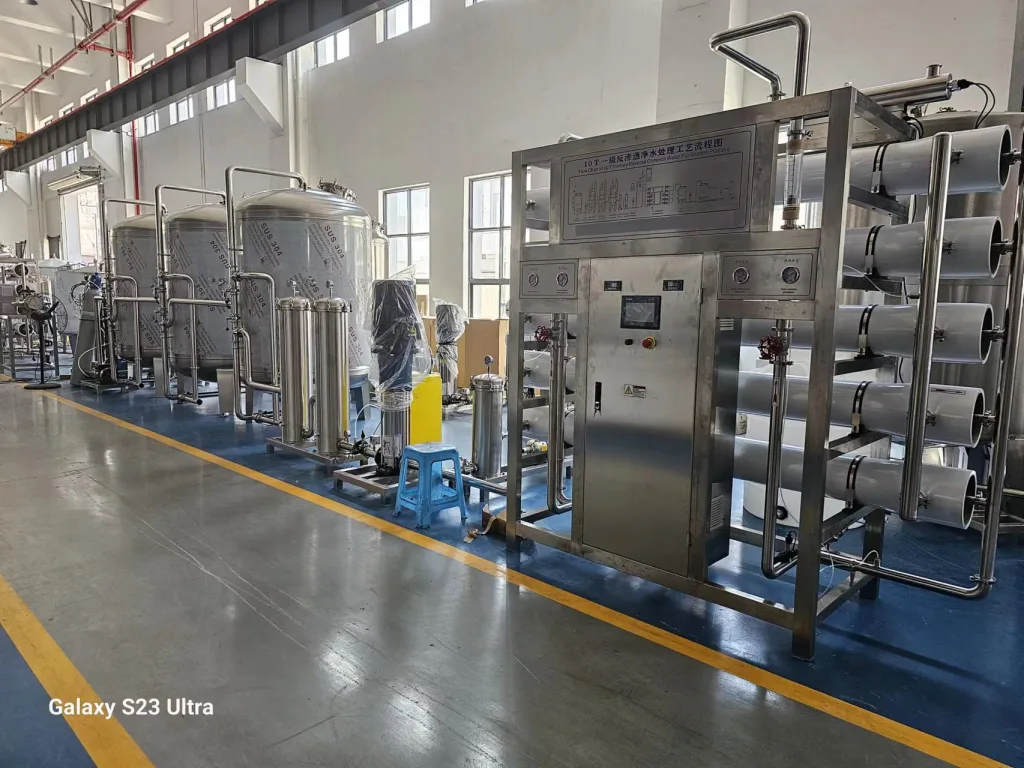
Meanwhile, once the source is selected, the water is collected and stored in stainless steel tanks. These tanks help prevent contamination and maintain water stability before treatment. Proper storage is important to ensure that the raw water quality does not deteriorate before entering the purification system.
Key Steps in Bottled Water Treatment Process
Pre-Filtration: Removing Large Particles
At the beginning of treatment, pre-filtration is used to remove sand, rust, and suspended solids. This step protects downstream equipment and improves overall system efficiency. Without proper pre-filtration, later stages such as membranes can be damaged or clogged.
Primary Filtration: Improving Water Quality
Following pre-filtration, the water passes through sand filters and activated carbon filters. This stage removes smaller particles, chlorine, and organic substances. As a result, the water becomes clearer and free from unwanted odors, which improves the final taste.
Membrane Filtration: Deep Purification
Next, advanced filtration methods such as ultrafiltration (UF) or reverse osmosis water treatment (RO) are applied. In purified water production, RO systems are widely used because they can remove dissolved salts, microorganisms, and most contaminants. This step is the core of a modern water purification system.
Disinfection: Ensuring Microbial Safety
After filtration, disinfection is required to eliminate any remaining bacteria or viruses. Typically, ultraviolet (UV) sterilization and ozone treatment are used. UV light provides fast and effective sterilization, while ozone ensures long-lasting protection without leaving residues.
Polishing Filtration and Adjustment
Finally, polishing filtration ensures that any remaining fine particles are removed. In some cases, mineral adjustment may be applied, especially for mineral or spring water products. This step ensures consistent product quality before bottling.
Bottle Blowing and Preparation
PET Bottle Blowing
In most plants, PET preforms are heated and shaped into bottles using a bottle blowing machine. This process ensures consistent bottle size and strength, which is important for filling and transportation.
Kiểm tra chai
At the same time, each bottle is inspected to ensure there are no defects such as cracks or uneven thickness. This step helps prevent leakage and maintains product safety.
Filling and Capping Process
Rửa chai
Before filling, bottles are rinsed with sterile water or air. This removes dust and ensures a clean internal environment.
Đổ nước
Next, the treated water is filled into bottles using an automatic water filling machine. The filling process is carried out in a controlled environment to prevent contamination. Modern bottled water filling lines are designed for high speed and high precision.
Đóng nắp và niêm phong
Immediately after filling, bottles are sealed with caps. This step prevents external contamination and preserves water quality during storage and transport.
Ghi nhãn và đóng gói
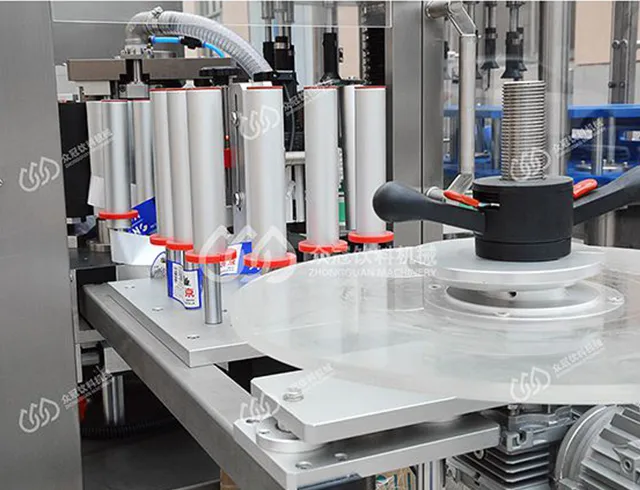
Once the bottles are sealed, they move to the labeling and packaging stage. máy dán nhãn apply product information, including brand, source, and production date. At the same time, coding systems ensure traceability. Finally, bottles are packed into cartons or wrapped for distribution, completing the bottled water production line.
Why Bottled Water Treatment Methods Vary
It is important to note that not all bottled water follows the same process. For example, purified water typically relies on reverse osmosis water treatment, while spring water often uses gentler filtration to preserve natural minerals. Therefore, the design of the water purification system depends on both the water source and the product positioning.
Key Equipment in a Bottled Water Production Line
In summary, a complete system includes several essential machines:
- Water treatment system (filters, RO system, UV, ozone)
- Máy thổi chai
- máy rót nước
- Máy ghi nhãn
- Hệ thống đóng gói
Each piece of equipment works together to ensure efficiency, hygiene, and consistent product quality.
Conclusion: Building an Efficient Bottled Water Treatment System
Overall, the bottled water treatment process is a carefully controlled system that transforms raw water into a safe and market-ready product. From source selection to final packaging, every step must be properly managed to ensure quality and efficiency. For manufacturers, investing in the right equipment and process design is the key to long-term success.
If you are looking for a reliable solution to build or upgrade your bottled water production line, SinoPAK Machinery offers advanced equipment and customized systems to meet your needs. As an experienced supplier of water filling machines and complete water treatment solutions, SinoPAK Machinery is ready to help you improve efficiency, ensure product quality, and grow your business. Liên hệ với chúng tôi ngay hôm nay để tìm hiểu thêm.
