

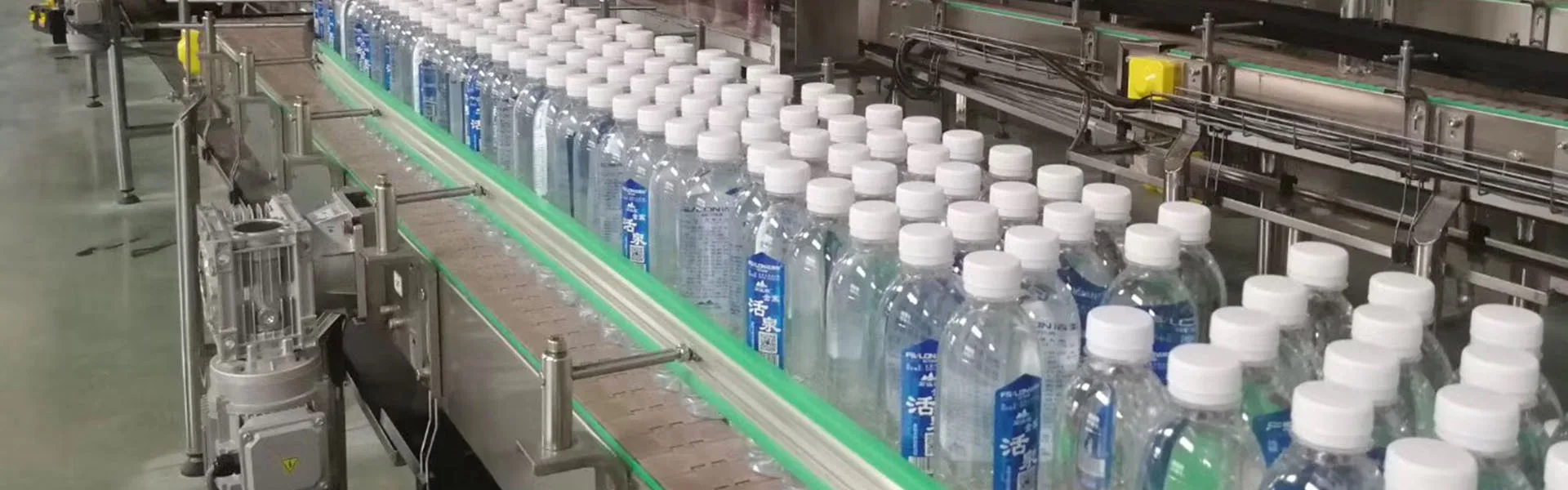
Bottled water is one of the most consumed beverages in the world, and its production relies heavily on automated filling systems to ensure efficiency and hygiene. Whether it’s a small local brand or a high-speed industrial line, the bottle water filling machine plays a critical role in delivering clean, sealed bottles at scale. This guide explains how these machines work—step by step—from bottle rinsing to final capping.
1. What Is a Bottle Water Filling Machine?
A bottle water filling machine is a fully automated packaging system designed to rinse, fill, and cap plastic or glass bottles with purified or mineral water. These machines are an essential part of modern beverage production lines, where hygiene, precision, and speed are critical.

The standard machine design integrates three operations into one unit: bottle rinsing, liquid filling, and cap sealing. This “3-in-1” configuration reduces floor space, minimizes transfer contamination, and improves synchronization between different stages of production. Most machines are built using food-grade stainless steel to ensure long-term durability and hygiene.
Bottle water filling machines can handle a wide range of bottle sizes, cap types, and output capacities. Whether used in small-scale bottling operations or high-speed commercial lines, these machines enable efficient, consistent water packaging with minimal manual intervention.
2. Core Components and Their Functions
The operation of a bottle water filling machine depends on several key components, each with a distinct role in the production sequence:
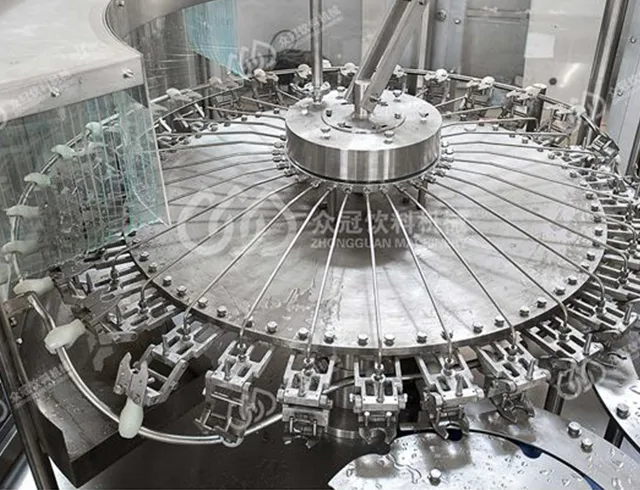
Rinsing Unit
This section prepares bottles for filling by cleaning their interior. Bottles are held by neck grippers and rotated upside-down while high-pressure water jets spray the inside. The rinsing cycle helps eliminate dust, particles, or residues that may be present from transportation or storage.
Sistema de llenado
Once rinsed, bottles are transferred to the filling station. Modern machines use isobaric (pressure-equalized) or gravity-fed filling valves depending on the line’s design. Isobaric filling helps maintain precise liquid levels and prevents foaming, while gravity systems are more common in lower-speed applications. The valves open only when bottles are correctly aligned and sealed against the filling head.
Capping Mechanism
This unit applies and secures caps onto the filled bottles. A cap feeder aligns caps and delivers them to the capping head. Torque-controlled heads ensure that each cap is tightened to specifications without damaging the bottle or the closure. Sensors detect missing or improperly placed caps, which are automatically rejected.

Infeed and Outfeed Conveyors
These conveyors move bottles smoothly between sections. The infeed starwheel positions incoming bottles into the rinsing carousel, while the outfeed conveyor collects finished bottles after capping. The coordination of these systems is essential to maintaining continuous production flow.
Frame and Hygiene Enclosure
The machine frame provides structural support and often includes a transparent enclosure that protects the process from external contaminants. Access doors are usually integrated for maintenance and inspection.
3. Step-by-Step Working Process
The entire operation of a bottle water filling machine follows a continuous, synchronized process that ensures efficiency and product safety. Here’s how the machine works from start to finish:
Step 1: Bottle Infeed
Empty bottles arrive at the machine via a conveyor belt. A bottle handling mechanism, usually a starwheel, guides them into the rinsing section. Sensors verify proper bottle orientation and spacing to avoid jams.
Step 2: Rinsing
Each bottle is clamped by its neck and rotated upside-down. A jet of sterilized water or recycled rinse water is sprayed into the bottle under pressure. After a timed cycle, the water drains out, and the bottle is returned to an upright position. It is then transferred to the filling station.
Step 3: Filling
The bottle is aligned under a filling valve. For isobaric filling, the bottle is first pressurized to match the tank pressure, preventing foaming. The valve opens and water flows in until a preset fill level is reached. Once filled, the valve closes, and the bottle moves forward automatically.
Step 4: Capping
A cap is placed onto the bottle and secured by a rotating capping head. The machine applies controlled torque to ensure a leak-proof seal without over-tightening. A reject mechanism separates bottles with missing or misapplied caps.
Step 5: Bottle Outfeed
Sealed bottles are moved onto the outfeed conveyor for labeling, inspection, or packaging. At this stage, additional quality control systems (like weight checkers or cap detectors) may be integrated, depending on the production requirements.
4. Automation & Control Mechanism
Automation is the core of modern filling machines. Most systems are controlled by programmable logic controllers (PLCs), which coordinate the timing and sequence of all operations. The PLC receives input from sensors located throughout the machine and responds by adjusting motors, valves, and actuators in real time.
Touchscreen Interface (HMI)
An integrated touchscreen allows operators to manage all system parameters from a single panel. Settings like fill time, bottle size, and capping torque can be adjusted based on production needs. The interface also displays alarms, maintenance alerts, and performance data.
Sensors and Interlocks
Smart sensors are deployed to monitor bottle presence, liquid level, cap alignment, and system pressure. These sensors trigger automatic actions such as stopping the line if no bottles are detected or rejecting improperly sealed containers.
Line Integration
The filling machine can be connected to upstream and downstream equipment, including bottle unscramblers, labeling machines, shrink wrappers, and palletizers. PLCs communicate with other systems to maintain line balance and prevent bottlenecks.
5.Benefits of Using Modern Filling Machines
The adoption of automated máquinas llenadoras de agua embotellada brings several operational advantages:
-
Mayores velocidades de producción
Los modelos de alta velocidad pueden procesar miles de botellas por hora, lo que aumenta significativamente la productividad.
-
Precisión de llenado mejorada
Las válvulas isobáricas y los sensores de nivel garantizan volúmenes de llenado constantes, minimizando la pérdida de producto y las quejas de los consumidores. -
Menor dependencia de la mano de obra
La automatización reduce la necesidad de manipulación manual, disminuyendo el error humano y los costes laborales. -
Estándares de higiene mejorados
La construcción en acero inoxidable, los sistemas CIP y los diseños de circuito cerrado reducen el riesgo de contaminación. -
Flexibilidad en los tamaños de botella
Las máquinas pueden configurarse o ajustarse para adaptarse a diferentes alturas, diámetros y tipos de tapones de botella.

6. Aplicaciones típicas en la producción de agua embotellada
Pequeñas plantas embotelladoras
Las máquinas compactas con una producción moderada, que suele oscilar entre 3.000 y 6.000 botellas por hora, son ideales para operaciones a pequeña escala. Estos sistemas suelen ser elegidos por marcas regionales o empresas emergentes debido a su facilidad de uso, mantenimiento sencillo y menores requisitos de espacio.
Instalaciones a escala industrial
Las líneas automáticas de alta velocidad se utilizan habitualmente en grandes plantas embotelladoras donde la producción diaria supera las decenas de miles de botellas. Estas máquinas están diseñadas para un funcionamiento continuo, un llenado preciso y una integración perfecta con otros equipos automatizados en toda la línea de producción.
Líneas OEM y de co-envasado
En entornos de fabricación por contrato, la flexibilidad es clave. Las máquinas de llenado de agua embotellada deben adaptarse a múltiples tipos de botellas, formatos de tapón y requisitos específicos del cliente. Los cambios rápidos y un rendimiento fiable son esenciales para cumplir con los variados programas de producción.
Formatos especializados
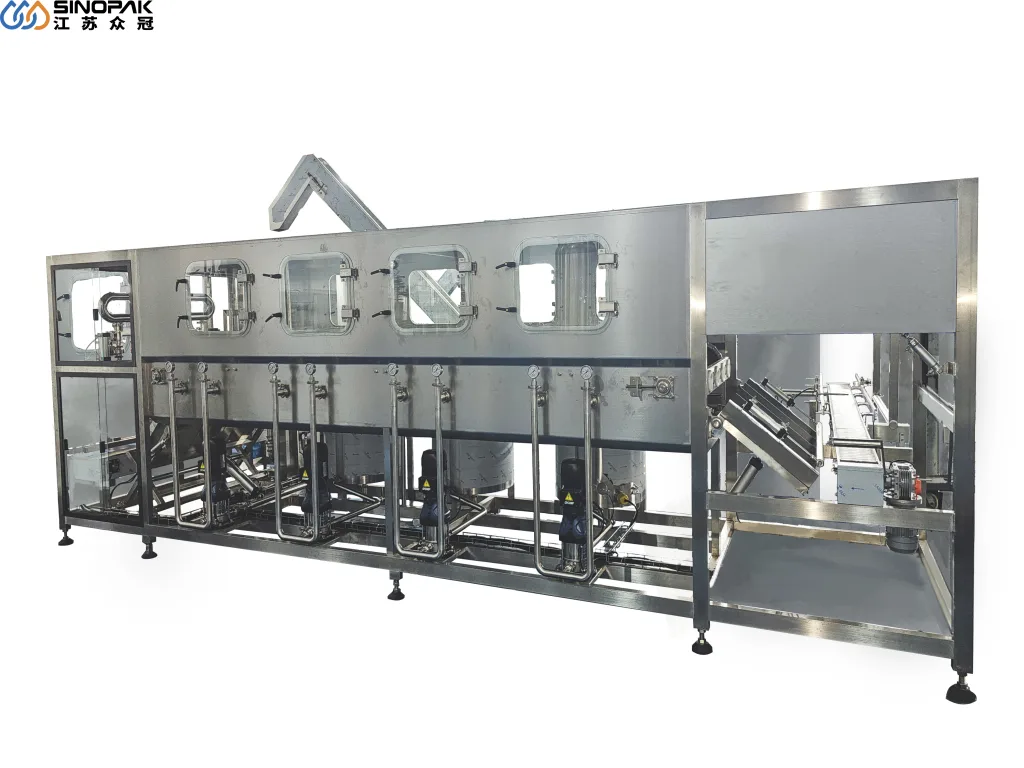
Las máquinas personalizadas para tamaños de botella más grandes, como los envases de 3 o 5 litros, requieren ajustes de diseño específicos. Estos pueden incluir transportadores reforzados, brazos de enjuague modificados y cabezales de tapado de alto par para garantizar la estabilidad y la precisión a mayor escala.
7. Elija la máquina de llenado de agua embotellada adecuada para su línea
Seleccionar la máquina de llenado de agua embotellada más adecuada requiere una comprensión clara de sus objetivos de producción, formatos de envasado y recursos operativos. La primera consideración es la capacidad de producción. Las máquinas suelen clasificarse en botellas por hora (BPH), y seleccionar un modelo alineado con su rendimiento diario real ayuda a garantizar un rendimiento estable y eficiente sin sobrecargar ni infrautilizar el equipo.
La compatibilidad del envasado es otro factor crítico. La máquina debe admitir las dimensiones específicas de su botella, los tipos de cuello y los formatos de tapón. Algunas líneas ofrecen un cambio de formato flexible, lo que le permite cambiar entre diferentes tamaños de botella con un tiempo de inactividad mínimo, una característica valiosa para las instalaciones que manejan múltiples SKU o fabricación por contrato.
La elección entre el llenado por gravedad y el isobárico depende de su velocidad de producción y de los requisitos de nivel de llenado. Los sistemas por gravedad son más sencillos y rentables, ideales para líneas de velocidad baja a media. Los sistemas isobáricos ofrecen un llenado más preciso y controlado, especialmente para operaciones de alta velocidad donde la precisión es clave.
Por último, considere cómo encaja la máquina en su entorno de producción general. La integración con equipos anteriores y posteriores, como enjuagadoras de botellas, etiquetadoras o enfardadoras, es esencial para mantener un flujo equilibrado y continuo. Tanto si está configurando una nueva línea de producción como si está actualizando una existente, elegir una máquina que admita la automatización y la escalabilidad ofrecerá ventajas a largo plazo.
Conclusión
Las máquinas de llenado de agua embotellada funcionan mediante un proceso estrechamente coordinado de enjuague, llenado y tapado, todo ello controlado por una automatización inteligente. Al combinar higiene, precisión y eficiencia, estos sistemas forman la columna vertebral de la producción de agua embotellada en todo el mundo.
En SinoPAK Machinery, estos principios están integrados en cada máquina. Con una ingeniería avanzada y configuraciones flexibles, nuestras soluciones de llenado satisfacen las demandas de diversas líneas de producción, ofreciendo un embotellado limpio, fiable y de alta velocidad para su negocio.
Contáctenos en sales@sinopakmachinery.com o visite https://www.sinopakmachinery.com/