

1. Introduction
In modern bottled water production, efficiency is no longer determined by the filling machine alone. The true performance of a factory depends on how well the entire system works together.
Many manufacturers invest in high-speed filling equipment but struggle with bottlenecks in labeling, shrink wrapping, or palletizing. Without proper water filling line integration, even advanced machines cannot achieve maximum output.
As a professional complete water bottle filling machine manufacturer, we specialize in designing fully synchronized production systems. In this guide, we explain how to integrate water filling lines with packaging machines to achieve seamless bottling line automation and long-term production stability.
2. Why Integration Matters in Modern Bottling Plants
A disconnected production system leads to:
-
Speed mismatches
-
Product accumulation
-
Conveyor congestion
-
Frequent micro-stoppages
-
Increased labor dependency
True efficiency comes from engineering the filling section and packaging machines as one unified system.
Proper water filling line integration ensures:
✔ Stable throughput
✔ Reduced downtime
✔ Lower labor cost
✔ Improved production efficiency
✔ Scalable automation
Step 1: Synchronize Production Capacity Across All Machines
The most common integration mistake is mismatched capacity.
For example:
-
Filling machine: 24,000 BPH
-
Labeling machine: 18,000 BPH
-
Shrink wrapper: 20,000 BPH
This imbalance creates accumulation zones and forced slowdowns.
Expert Recommendation:
Before purchasing packaging machines, conduct a full production flow calculation including:
-
Target BPH
-
Buffer time
-
Conveyor length
-
Accumulation capacity
Capacity alignment is the foundation of successful bottling line automation.
Step 2: Design Intelligent Conveyor Systems
Conveyors are often underestimated, yet they are critical in water filling line integration.
Key considerations:
-
Air conveyors for lightweight PET bottles
-
Chain plate conveyors for filled bottles
-
Adjustable guide rails
-
Anti-backpressure design
-
Accumulation buffer zones
A well-designed conveying system absorbs minor speed fluctuations and prevents forced shutdowns.
Step 3: Integrate Centralized PLC Control Systems
Independent machines from multiple suppliers often operate with separate control systems. This results in:
-
Delayed response times
-
Communication errors
-
Difficult troubleshooting
Modern water filling line integration requires:
✔ Unified PLC architecture
✔ Touchscreen central monitoring
✔ Real-time production data
✔ Fault alarm linkage
✔ Speed auto-adjustment
Central control significantly enhances overall line stability.
Step 4: Match Packaging Machines with Filling Technology
Different packaging machines require specific integration strategies.
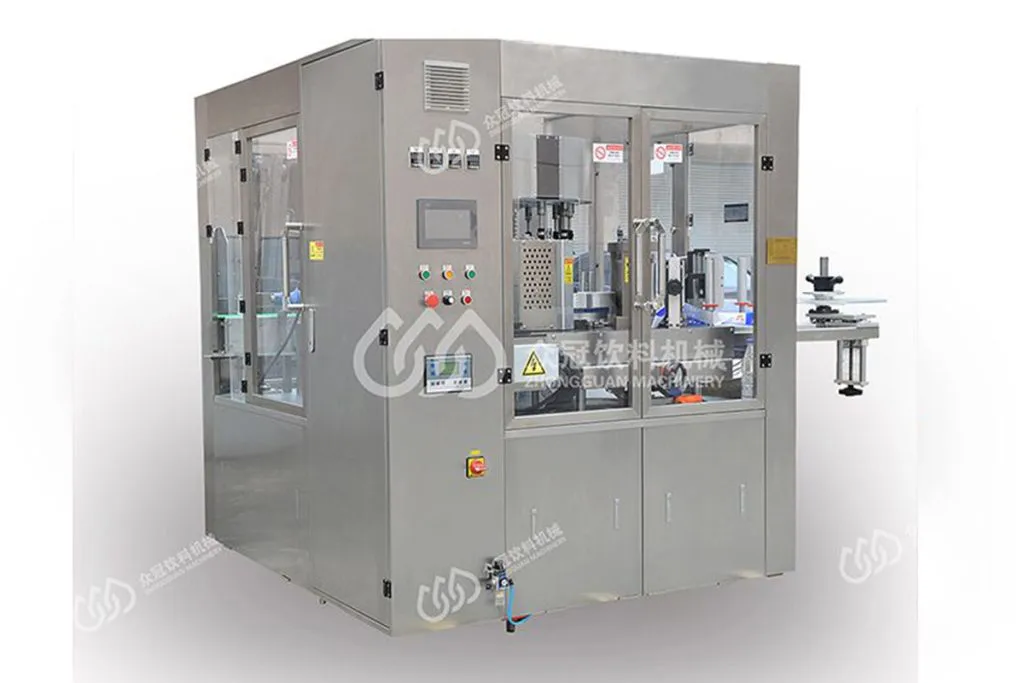
Labeling Machines
-
Must match bottle positioning accuracy
-
Require synchronized conveyor speed
-
Vision inspection systems recommended
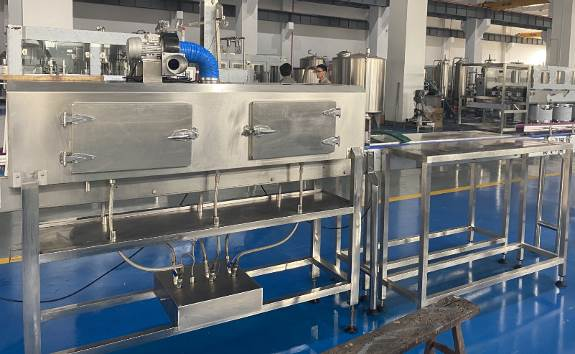
Shrink Wrapping Machines
-
Need consistent bottle grouping
-
Require stable infeed spacing
-
Should include automatic film feeding systems
Cartoning & Case Packing Machines
-
Require precise bottle alignment
-
Integrated counting systems reduce mispacking
Palletizing Systems
-
Robotic or gantry palletizers
-
Should be matched to shrink wrapping output
-
Integrated pallet conveying system improves efficiency
Successful packaging machine integration ensures smooth material flow from filling to final pallet.
Step 5: Implement Bottling Line Automation to Reduce Labor
Manual handling between filling and packaging stages increases:
-
Labor costs
-
Product contamination risk
-
Production inconsistency
Full bottling line automation includes:
-
Automatic bottle feeding
-
Automatic cap feeding
-
Automatic labeling
-
Automatic shrink wrapping
-
Automatic palletizing
Automation not only improves efficiency but also enhances brand image and compliance standards.
Step 6: Plan for Future Expansion
A well-designed integrated system allows for future capacity upgrades.
Consider:
-
Modular equipment layout
-
Expandable PLC systems
-
Space allocation for additional packaging units
-
Higher-capacity palletizers
Forward-thinking engineering reduces long-term reinvestment costs.
3. Common Integration Challenges and Solutions
| Challenge | Solution |
|---|---|
| Bottle congestion | Install accumulation buffers |
| Speed fluctuation | Use variable frequency drives (VFD) |
| Inconsistent labeling | Add bottle positioning systems |
| Frequent downtime | Centralized monitoring & predictive maintenance |
Experience in full-line engineering makes a significant difference.
4. Benefits of Professional Water Filling Line Integration
Manufacturers who adopt integrated solutions typically achieve:
-
15–35% increase in throughput
-
20–30% reduction in downtime
-
Reduced labor requirements
-
Improved packaging consistency
-
Faster ROI
Integration transforms individual machines into a high-performance production ecosystem.
5. Turnkey Solution vs. Separate Equipment Purchasing
Buying machines separately may reduce initial investment but often increases:
-
Integration complexity
-
Maintenance difficulty
-
Communication delays
-
Long-term operational costs
Turnkey water filling line solutions provide:
✔ Unified engineering design
✔ Coordinated installation
✔ Faster commissioning
✔ Long-term technical support
Choosing an experienced manufacturer simplifies the entire process.
6. Our Integration Expertise
As a professional manufacturer of water filling lines and related packaging machines, we provide:
-
Complete bottled water production lines
-
Filling and capping systems
-
Labeling machines
-
Shrink wrapping equipment
-
Case packing solutions
-
Robotic palletizers
-
Integrated automation systems
Our engineering team customizes layouts based on:
-
Factory size
-
Production capacity
-
Bottle format
-
Budget requirements
7. Conclusion
Efficient production is no longer about individual equipment performance. It is about how seamlessly your water filling line integrates with packaging machines.
Strategic water filling line integration and intelligent bottling line automation ensure smooth operation, reduced downtime, and long-term profitability.
If you are planning to upgrade your production facility or build a new water bottling plant, professional integration planning is essential.
8. Contact Our Engineering Team
Looking to design or upgrade your integrated bottling system?
Contact us for:
-
Production line layout design
-
Automation planning consultation
-
Capacity analysis
-
Detailed turnkey quotation
Let us help you build a fully automated and future-ready bottling plant.