

 Français
  Español
  Português
  العربية
 Bottled water is one of the most consumed beverages in the world, and its production relies heavily on automated filling systems to ensure efficiency and hygiene. Whether it’s a small local brand or a high-speed industrial line, the bottle water filling machine plays a critical role in delivering clean, sealed bottles at scale. This guide explains how these machines work—step by step—from bottle rinsing to final capping.
1. What Is a Bottle Water Filling Machine?
A bottle water filling machine is a fully automated packaging system designed to rinse, fill, and cap plastic or glass bottles with purified or mineral water. These machines are an essential part of modern beverage production lines, where hygiene, precision, and speed are critical.
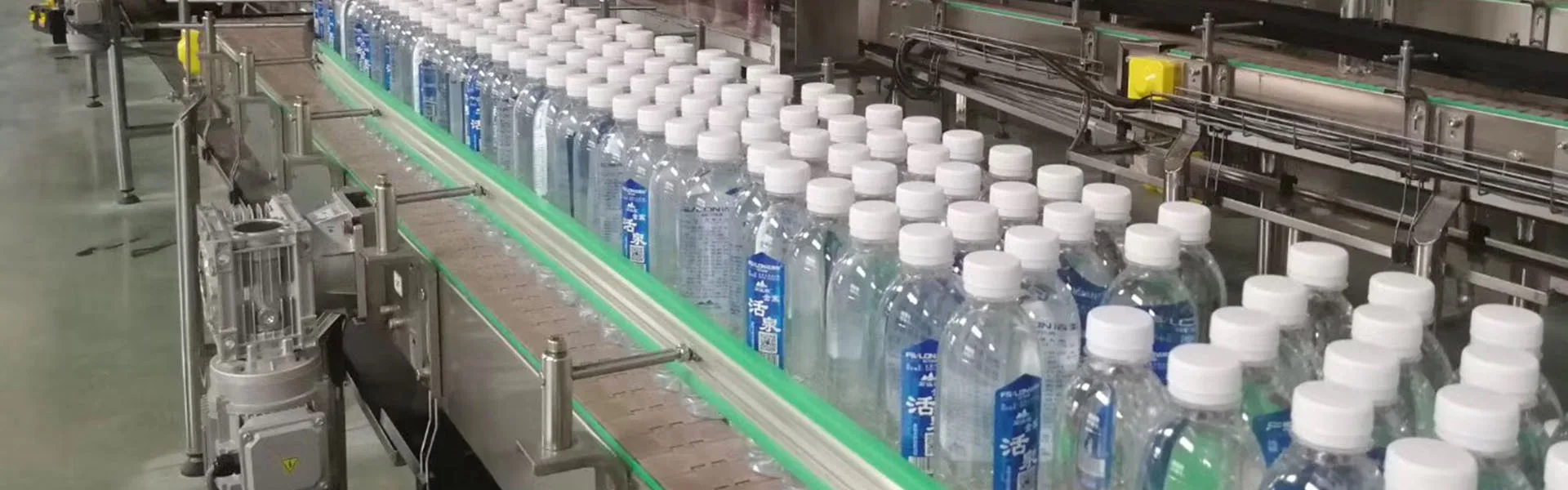
The standard machine design integrates three operations into one unit: bottle rinsing, liquid filling, and cap sealing. This “3-in-1” configuration reduces floor space, minimizes transfer contamination, and improves synchronization between different stages of production. Most machines are built using food-grade stainless steel to ensure long-term durability and hygiene.
Bottle water filling machines can handle a wide range of bottle sizes, cap types, and output capacities. Whether used in small-scale bottling operations or high-speed commercial lines, these machines enable efficient, consistent water packaging with minimal manual intervention.
2. Core Components and Their Functions
The operation of a bottle water filling machine depends on several key components, each with a distinct role in the production sequence:
Rinsing Unit
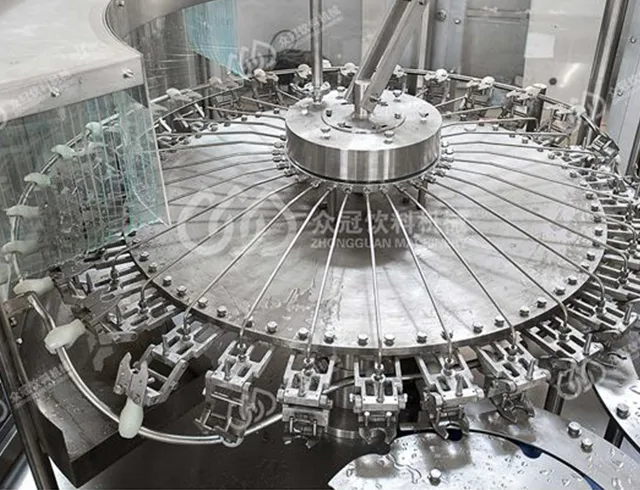
This section prepares bottles for filling by cleaning their interior. Bottles are held by neck grippers and rotated upside-down while high-pressure water jets spray the inside. The rinsing cycle helps eliminate dust, particles, or residues that may be present from transportation or storage.
Filling System
Once rinsed, bottles are transferred to the filling station. Modern machines use isobaric (pressure-equalized) or gravity-fed filling valves depending on the line’s design. Isobaric filling helps maintain precise liquid levels and prevents foaming, while gravity systems are more common in lower-speed applications. The valves open only when bottles are correctly aligned and sealed against the filling head.
Capping Mechanism
This unit applies and secures caps onto the filled bottles. A cap feeder aligns caps and delivers them to the capping head. Torque-controlled heads ensure that each cap is tightened to specifications without damaging the bottle or the closure. Sensors detect missing or improperly placed caps, which are automatically rejected.

Infeed and Outfeed Conveyors
These conveyors move bottles smoothly between sections. The infeed starwheel positions incoming bottles into the rinsing carousel, while the outfeed conveyor collects finished bottles after capping. The coordination of these systems is essential to maintaining continuous production flow.
Frame and Hygiene Enclosure
The machine frame provides structural support and often includes a transparent enclosure that protects the process from external contaminants. Access doors are usually integrated for maintenance and inspection.
3. Step-by-Step Working Process
The entire operation of a bottle water filling machine follows a continuous, synchronized process that ensures efficiency and product safety. Here’s how the machine works from start to finish:
Step 1: Bottle Infeed
Empty bottles arrive at the machine via a conveyor belt. A bottle handling mechanism, usually a starwheel, guides them into the rinsing section. Sensors verify proper bottle orientation and spacing to avoid jams.
Step 2: Rinsing
Each bottle is clamped by its neck and rotated upside-down. A jet of sterilized water or recycled rinse water is sprayed into the bottle under pressure. After a timed cycle, the water drains out, and the bottle is returned to an upright position. It is then transferred to the filling station.
Step 3: Filling
The bottle is aligned under a filling valve. For isobaric filling, the bottle is first pressurized to match the tank pressure, preventing foaming. The valve opens and water flows in until a preset fill level is reached. Once filled, the valve closes, and the bottle moves forward automatically.
Step 4: Capping
A cap is placed onto the bottle and secured by a rotating capping head. The machine applies controlled torque to ensure a leak-proof seal without over-tightening. A reject mechanism separates bottles with missing or misapplied caps.
Step 5: Bottle Outfeed
Sealed bottles are moved onto the outfeed conveyor for labeling, inspection, or packaging. At this stage, additional quality control systems (like weight checkers or cap detectors) may be integrated, depending on the production requirements.
4. Automation & Control Mechanism
Automation is the core of modern filling machines. Most systems are controlled by programmable logic controllers (PLCs), which coordinate the timing and sequence of all operations. The PLC receives input from sensors located throughout the machine and responds by adjusting motors, valves, and actuators in real time.
Touchscreen Interface (HMI)
An integrated touchscreen allows operators to manage all system parameters from a single panel. Settings like fill time, bottle size, and capping torque can be adjusted based on production needs. The interface also displays alarms, maintenance alerts, and performance data.
Sensors and Interlocks
Smart sensors are deployed to monitor bottle presence, liquid level, cap alignment, and system pressure. These sensors trigger automatic actions such as stopping the line if no bottles are detected or rejecting improperly sealed containers.
Line Integration
The filling machine can be connected to upstream and downstream equipment, including bottle unscramblers, labeling machines, shrink wrappers, and palletizers. PLCs communicate with other systems to maintain line balance and prevent bottlenecks.
5.Benefits of Using Modern Filling Machines
The adoption of automated bottle water filling machines brings several operational advantages:
Higher Production Speeds
High-speed models can process thousands of bottles per hour, significantly boosting productivity.
Improved Filling Accuracy
Isobaric valves and level sensors ensure consistent fill volumes, minimizing product loss and consumer complaints.Reduced Labor Dependency
Automation lowers the need for manual handling, reducing human error and labor costs.Enhanced Hygiene Standards
Stainless steel construction, CIP systems, and closed-loop designs reduce the risk of contamination.Flexibility Across Bottle Sizes
Machines can be configured or adjusted to accommodate different bottle heights, diameters, and cap types.

6. Typical Applications in Bottled Water Production
Small Bottling Plants
Compact machines with moderate output, typically ranging from 3,000 to 6,000 bottles per hour, are ideal for small-scale operations. These systems are often chosen by regional brands or startups due to their ease of use, simple maintenance, and lower space requirements.
Industrial-Scale Facilities
High-speed automatic lines are commonly used in large bottling plants where daily production exceeds tens of thousands of bottles. These machines are designed for continuous operation, accurate filling, and seamless integration with other automated equipment across the production line.
OEM and Co-Packing Lines
In contract manufacturing environments, flexibility is key. Bottle water filling machines must accommodate multiple bottle types, cap formats, and customer-specific requirements. Fast changeovers and reliable performance are essential for keeping up with varied production schedules.
Specialized Formats
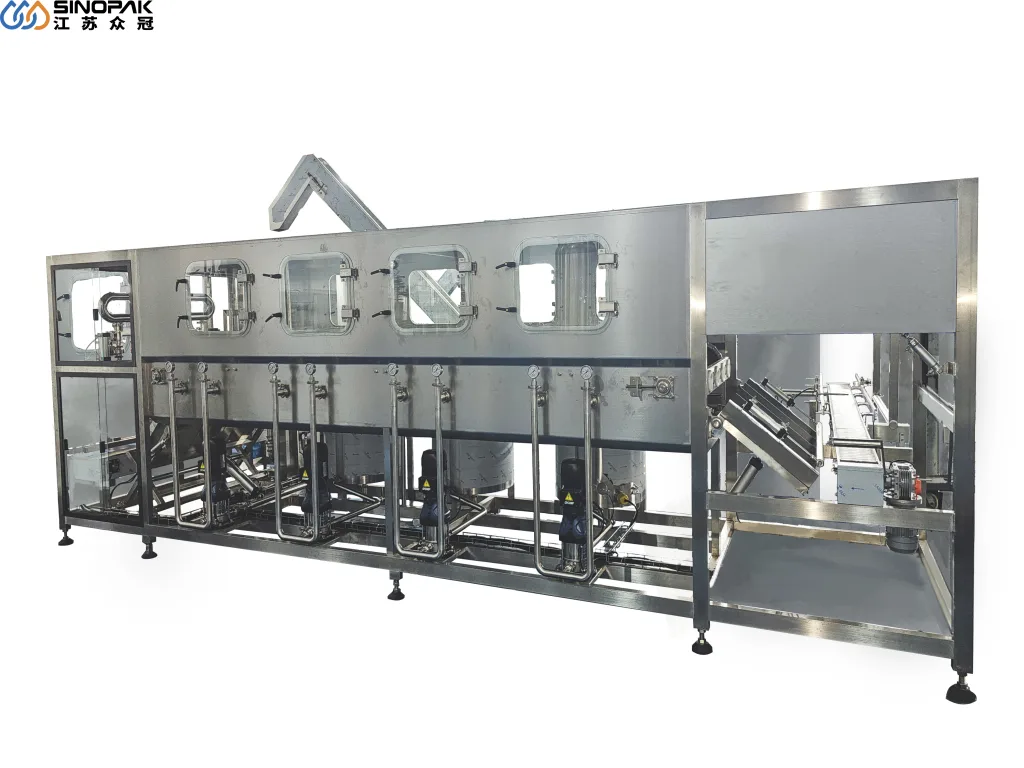
Machines customized for larger bottle sizes—such as 3-liter or 5-liter containers—require specific design adjustments. These may include reinforced conveyors, modified rinsing arms, and high-torque capping heads to ensure stability and precision at larger scales.
7. Choose the Right Bottle Water Filling Machine for Your Line
Selecting the most suitable bottle water filling machine requires a clear understanding of your production goals, packaging formats, and operational resources. The first consideration is output capacity. Machines are typically rated in bottles per hour (BPH), and selecting a model aligned with your actual daily throughput helps ensure stable, efficient performance without overloading or underutilizing the equipment.
Packaging compatibility is another critical factor. The machine must support your specific bottle dimensions, neck types, and cap formats. Some lines offer flexible format changeover, allowing you to switch between different bottle sizes with minimal downtime—a valuable feature for facilities handling multiple SKUs or contract manufacturing.
The choice between gravity and isobaric filling depends on your production speed and fill-level requirements. Gravity systems are simpler and cost-effective, ideal for low- to medium-speed lines. Isobaric systems offer more accurate and controlled filling, especially for high-speed operations where precision is key.
Finally, consider how the machine fits within your broader production environment. Integration with upstream and downstream equipment—such as bottle rinsers, labelers, or shrink wrappers—is essential for maintaining a balanced, continuous flow. Whether you’re setting up a new production line or upgrading an existing one, choosing a machine that supports automation and scalability will offer long-term advantages.
Conclusion
Bottle water filling machines operate through a tightly coordinated process of rinsing, filling, and capping—all controlled by intelligent automation. By combining hygiene, precision, and efficiency, these systems form the backbone of bottled water production worldwide.
At Sinopak Machinery, these principles are built into every machine. With advanced engineering and flexible configurations, our filling solutions meet the demands of diverse production lines—delivering clean, reliable, and high-speed bottling for your business.
Reach us at sales@sinopakmachinery.com or visit https://www.sinopakmachinery.com/
