

 Français
  Español
  Português
  العربية
 The global market for ready-to-drink juice and tea beverages continues to grow, driven by rising consumer demand for healthy, refreshing, and convenient drinks. To stay competitive in this evolving industry, beverage manufacturers must invest in efficient and reliable juice and tea filling machines that ensure hygiene, product integrity, and scalability.
But with so many options on the market—hot filling vs cold filling, gravity vs piston fillers, linear vs rotary systems—how do you choose the right juice/tea filling machine for your business?
In this article, we’ll explore the key factors to consider when selecting a juice or tea bottling solution. Whether you’re launching a startup beverage brand or expanding an existing factory, this guide will help you make a strategic investment aligned with your product and production needs.
1. Understand Your Product First: Juice or Tea?
Before diving into filling equipment specifications, it’s important to evaluate the type of product you’re working with:
| Product Type | Key Characteristics | Filling Requirements |
|---|---|---|
| Still Juice | No carbonation; may contain pulp | Gravity or piston filling; wide-mouth bottles |
| Hot-Filled Juice | Filled at 85–90°C for sterilization | Requires hot filling machine with temperature control |
| Cold-Filled Juice | Sensitive to contamination | Needs aseptic filling with CIP/SIP system |
| Pulp Juice | Contains fiber or solids | Piston fillers or rotary valve systems |
| Iced Tea | Still, clear beverage | Gravity filling; hot or cold depending on recipe |
| Herbal Tea | May contain sediment or extract particles | Custom nozzles to prevent clogging |
The viscosity, temperature, and presence of solids in your product directly affect the type of filler you’ll need.

2. Decide Between Hot Filling and Cold Filling
Hot Filling Machines
Used for juices and teas requiring sterilization without preservatives.
Beverage is filled at high temperature (~85°C), then capped and cooled.
Requires heat-resistant PET/glass bottles and compatible caps.
Advantages: Longer shelf life without preservatives.
Cold Filling Machines (Aseptic Filling)
Suitable for heat-sensitive drinks or products with added probiotics.
Requires sterilized product, containers, and filling environment.
Higher initial investment but superior flavor retention and versatility.
Choosing the wrong filling temperature type can compromise product safety or lead to equipment damage, so match your formulation and shelf-life goals accordingly.
3. Bottle Type and Packaging Format
Different containers require different filling, sealing, and handling systems.
Common Juice/Tea Packaging Types:
PET Bottles – Most common; lightweight and cost-effective.
Glass Bottles – Premium feel; suitable for hot fill and long shelf life.
Cans – Often used for iced tea; require sealing machines.
Aseptic Cartons – Less common, but need Tetra Pak-style equipment.
Make sure your machine is customized for:
Bottle size and shape (200ml, 500ml, 1L, etc.)
Mouth diameter and cap type (screw cap, ROPP, crown cap)
Labeling or shrink-sleeve compatibility
Integration with upstream/downstream equipment (e.g., pasteurizer, cap sterilizer, labeling system)
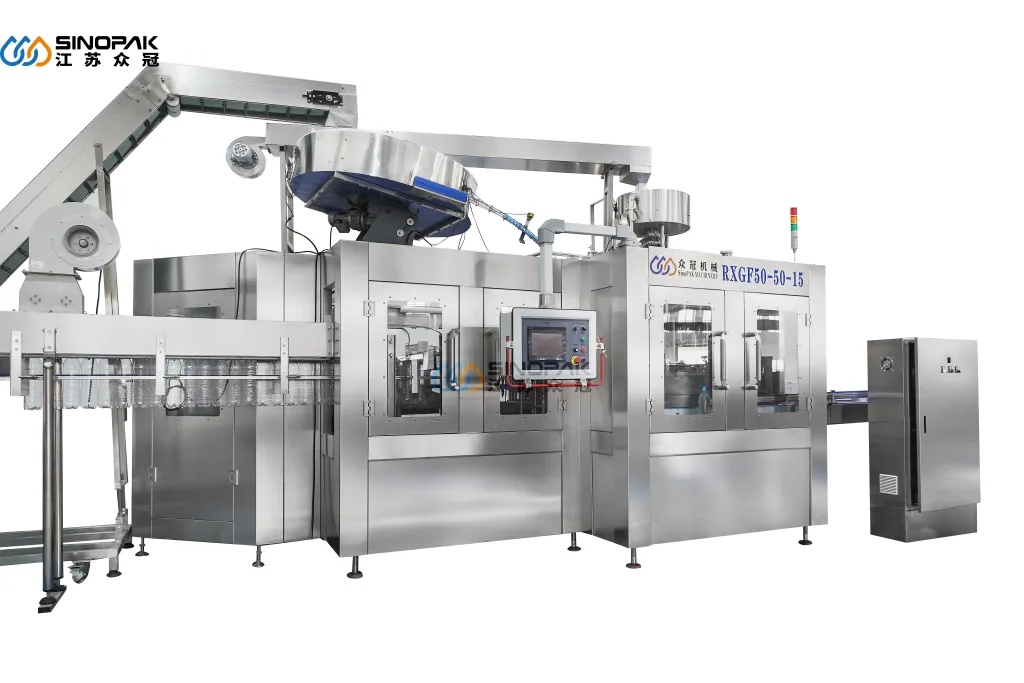
SinoPAK provides tailor-made juice and tea filling machines to match your packaging precisely.
4. Choose the Right Filling Method
Depending on your production goals and product features, you’ll need to choose between several filling methods:
Gravity Filling
Best for: Thin, non-carbonated drinks like tea or still juice
Affordable and easy to maintain
Not ideal for pulpy products
Piston Filling
Best for: Thick juices or drinks with pulp
Fills with precision based on volume
Higher accuracy, but more moving parts
Vacuum Filling
Best for: Glass bottles
Ensures accurate fill level and minimizes foam
Often used for premium teas
Isobaric Filling
Best for: Slightly carbonated or sensitive drinks
Maintains internal pressure to avoid foaming
Less common for juice, more for soda or sparkling tea
Ask your supplier for a sample test run based on your recipe and container.
5. Output Capacity (BPH): Plan for Now & Future
What’s your current production volume—and what do you plan for the next 2–3 years?
| Business Type | Recommended Output Capacity |
|---|---|
| Small Startup | 1,000 – 3,000 BPH |
| Growing SME | 3,000 – 8,000 BPH |
| Large Enterprise | 10,000 – 24,000 BPH |
Don’t just buy for today. A filling line is a long-term investment, so make sure the machine can be upgraded or scaled as needed.
SinoPAK offers modular machines that allow easy expansion from 3,000 BPH to 8,000+ BPH.

6. Automation Level: Manual, Semi, or Fully Automatic?
Automation improves efficiency, hygiene, and consistency, but also comes with a higher cost.
| Automation Level | Suitable For | Features |
|---|---|---|
| Manual | Low-budget startups | Hand filling and capping |
| Semi-Auto | Small-scale producers | Partial automation (filling only) |
| Full Automatic | Medium-large beverage factories | Touchscreen control, servo-driven, PLC, etc. |
If you plan to grow or reduce labor costs, choose fully automatic filling machines with:
PLC + HMI interface
Auto cap feeding & placing
Integrated CIP system
Labeling, shrinking, and packaging integration
7. Hygiene and Compliance Standards
Hygiene is non-negotiable in the juice and tea industry. Make sure the machine includes:
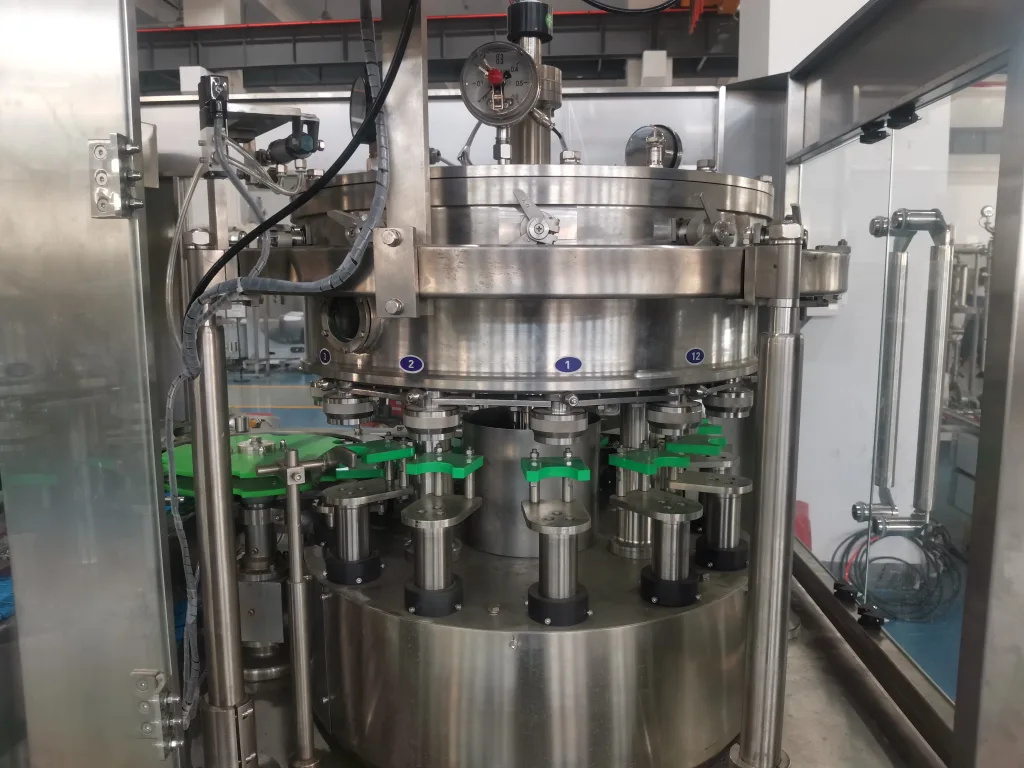
SUS304/316L stainless steel contact parts
CIP (Clean-in-Place) functionality
UV cap sterilizer / ozone rinsing
FDA / CE / ISO / GMP compliance
SinoPAK filling lines are designed to meet global food safety standards and include optional Aseptic technology.
8. Maintenance & After-Sales Support
Choose a supplier who offers complete technical documentation, training, spare parts, and remote diagnostics. Consider:
How often does the machine require maintenance?
Is there a local technician or remote support?
Are consumables and wear parts available quickly?
At Jiangsu SinoPAK Machinery Co., Ltd., we offer:
24/7 online support
On-site installation and training
Lifetime service for equipment
9. Budget and Return on Investment (ROI)
While pricing is important, don’t focus solely on upfront cost. A cheaper machine may cost more in:
Downtime
Product loss
Maintenance
Hygiene violations
Calculate:
Energy and water consumption
Labor cost reduction
Production output per shift
Look for a machine that offers the lowest total cost of ownership (TCO) over its lifespan.
Why Choose SinoPAK for Juice/Tea Filling Solutions?
With 15+ years of global experience and hundreds of installed beverage lines, Jiangsu SinoPAK Machinery Co., Ltd. is a leading provider of custom beverage packaging solutions.
What We Offer:
Customized 3-in-1 rinsing, filling, capping machines
Solutions for hot fill, aseptic, and pulp-rich drinks
Bottle blowing + filling + labeling + shrink packaging
Layout design + turnkey project delivery
CE, ISO, SGS certifications
Whether you’re filling 1,000 BPH herbal teas or 18,000 BPH tropical fruit juice, we provide the right machine for your product, budget, and factory.
Final Thoughts
Choosing the right juice or tea filling machine is not a one-size-fits-all process. It requires evaluating your product type, packaging format, production scale, and long-term goals. With the right guidance and a reliable equipment partner, you can ensure a smooth, safe, and scalable bottling operation.
Contact SinoPAK today to get a free consultation and layout proposal tailored to your business needs.
