

 Français
  Español
  Português
  العربية
 1. Introduction
For bottled water manufacturers, margins are often determined not by sales volume alone, but by production efficiency.
Even small inefficiencies in a water filling line — such as unplanned downtime, micro-stoppages, or inconsistent throughput — can result in significant annual losses.
As a professional complete water bottling filling machine manufacturer, we have supported factories worldwide in upgrading and optimizing their filling systems. In this guide, we share practical, engineering-based strategies for improving water filling line performance, reducing downtime, and achieving sustainable bottling optimization.
2. Identify the Real Bottleneck in Your Water Filling Line
Many factory managers assume the filler is the bottleneck. In reality, constraints often occur in:
Bottle unscrambling
Air conveyor systems
Capping torque inconsistency
Labeling synchronization
Shrink wrapping or palletizing
Expert Tip:
Conduct a full-line OEE (Overall Equipment Effectiveness) analysis to measure:
Availability
Performance
Quality rate
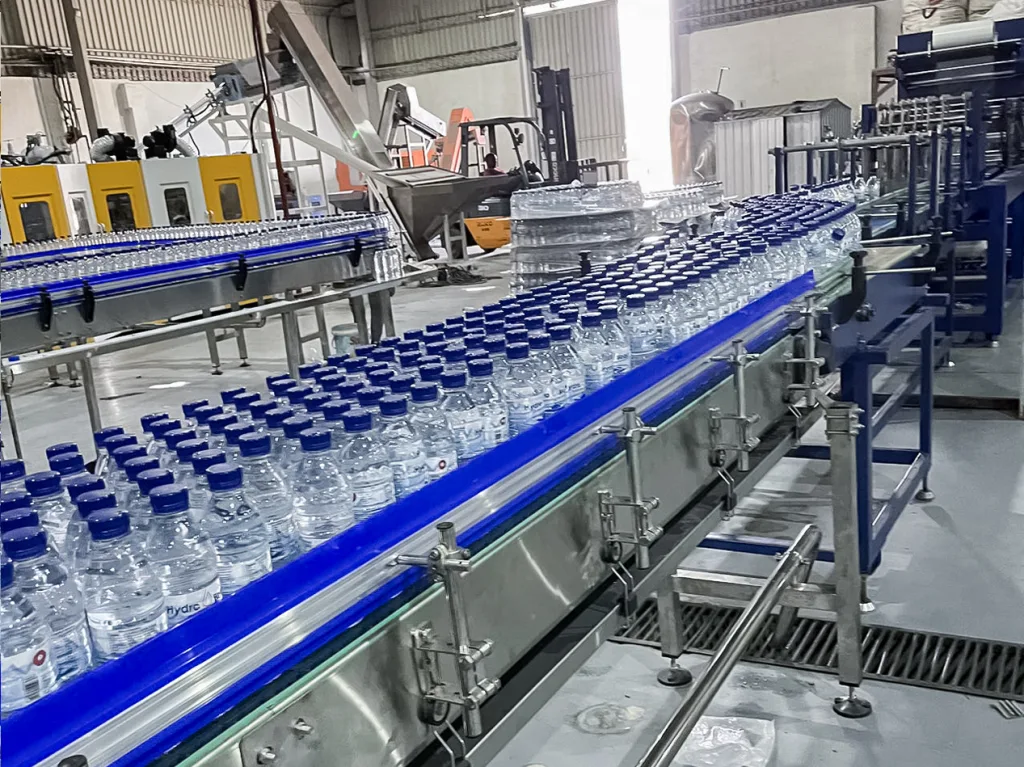
A properly engineered water filling line should operate with synchronized upstream and downstream equipment to prevent accumulation or starvation.
3. Upgrade to High-Precision Filling Technology
Modern filling technology significantly improves stability and throughput.
Key improvements include:
✔ Flowmeter-based filling valves
✔ Servo-controlled bottle positioning
✔ Automatic liquid level calibration
✔ Reduced foam and spillage design
Advanced filling machines ensure consistent fill levels at high speeds, minimizing product waste and rework.
For high-speed water production lines (e.g., 12,000–36,000 BPH), precision engineering directly impacts production efficiency.
4. Reduce Downtime with Preventive Maintenance Planning
Unexpected downtime is the biggest hidden cost in bottling plants.
Common causes include:
Worn sealing rings
Improper lubrication
Conveyor chain misalignment
Sensor failures
Inconsistent air pressure
Optimization Strategy:
Implement scheduled preventive maintenance
Keep critical spare parts in stock
Monitor vibration and temperature of motors
Use automated lubrication systems
A well-maintained water filling line can reduce downtime by 20–30% annually.
5. Improve Bottle Handling and Conveying Systems
Bottle transfer stability plays a crucial role in bottling optimization.
Issues such as:
Bottle collapse (especially lightweight PET)
Neck misalignment
Conveyor jams
Can significantly reduce throughput.
Recommended Solutions:
Air conveyor systems for lightweight bottles
Adjustable guide rails
Servo synchronization between filler and capper
High-quality chain plate materials
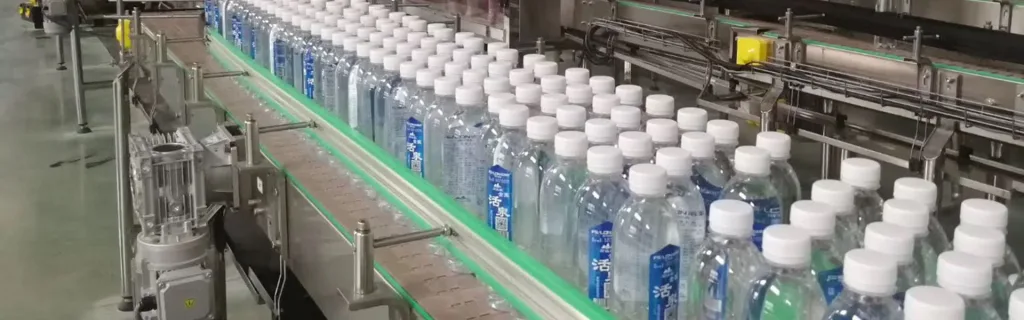
Proper conveying design ensures smooth high-speed production without micro-stoppages.
6. Automate Where It Matters Most
Automation is not just about reducing labor — it improves consistency.
Key automation upgrades include:
Automatic cap feeding systems
Vision inspection systems
Automatic rejection units
Robotic palletizers
Automated end-of-line solutions eliminate manual bottlenecks and significantly enhance overall production efficiency.
7. Optimize Water Treatment and Sterilization
Many manufacturers overlook upstream processes.
If water treatment systems fluctuate in pressure or flow rate, the filling section cannot maintain stable performance.
Ensure:
Stable filtration pressure
Proper ozone or UV sterilization
Consistent tank level control
Integrated system design improves overall water filling line stability.

8. Consider Line Integration Instead of Isolated Equipment
One common mistake is purchasing machines separately from different suppliers.
Without integrated engineering:
Speed mismatch occurs
Control systems lack communication
Troubleshooting becomes complex
Turnkey water filling line solutions provide:
✔ Unified PLC control
✔ Centralized monitoring
✔ Balanced capacity design
✔ Simplified maintenance
This is where experienced filling machine manufacturers add significant value.
9. Throughput Improvement Through Layout Optimization
Factory layout directly impacts performance.
Best practices include:
Linear material flow
Adequate buffer zones
Clear maintenance access
Separate clean and non-clean areas
Professional layout planning improves operational efficiency and future scalability.
10. Energy Efficiency as a Competitive Advantage
Energy consumption significantly affects operating costs.
Modern water filling lines incorporate:
Energy-efficient motors
Variable frequency drives (VFD)
Air recovery systems
Optimized heating elements
Improving energy efficiency not only reduces cost but enhances long-term competitiveness.

11. When to Upgrade Instead of Repair
If your production line frequently experiences:
High spare parts consumption
Capacity limitations
Increasing maintenance cost
Product quality instability
It may be time to consider a partial or full line upgrade.
In many cases, replacing key modules (filling block, capping system, palletizer) significantly improves throughput without rebuilding the entire factory.
12. Real-World Impact of Water Filling Line Optimization
From our global project experience, manufacturers who implemented structured bottling optimization strategies achieved:
15–40% increase in output
20–30% reduction in downtime
Lower labor costs
Reduced product loss
Faster ROI on equipment investment
13. Choosing the Right Partner for Optimization
Optimizing a water filling line requires more than equipment supply. It requires engineering expertise.
When selecting a supplier, evaluate:
Technical experience in high-speed water bottling
In-house manufacturing capability
On-site commissioning support
Long-term spare parts availability
Customization capability for different bottle formats
As a professional filling machine manufacturer, we provide:
Complete water filling lines
Technical audits of existing lines
Capacity expansion planning
Energy-saving upgrades
Long-term technical support
14. Conclusion
Optimizing your water filling line is not a one-time adjustment — it is a strategic process that combines equipment quality, engineering design, preventive maintenance, and smart automation.
By implementing structured bottling optimization strategies, manufacturers can significantly improve production efficiency, reduce downtime, and strengthen their market competitiveness.
If you are planning to upgrade your water bottling facility or improve current line performance, our engineering team is ready to provide customized optimization solutions tailored to your production capacity and budget.
15. Contact Us
Looking to maximize your water filling line efficiency?
Contact us today for:
Production capacity analysis
Line optimization proposal
Technical consultation
Detailed quotation
