

 Français
  Español
  Português
  العربية
 As consumer demand for bottled juice continues to grow, manufacturers are under increasing pressure to deliver safe, consistent, and high-quality products at scale. To achieve this, understanding the juice bottle filling process is essential. From raw fruit handling to final packaging, each step plays a critical role in product quality, shelf life, and production efficiency.
More importantly, modern production relies heavily on the juice filling machine, which acts as the core of the entire bottling line. In the following sections, we will walk through the complete juice bottle filling process and explain how filling equipment supports each stage in a practical, production-focused way.
1. Fruit Selection and Preparation
To begin with, the juice bottling process starts with selecting suitable raw fruits. Quality fruits ensure stable taste, color, and nutritional value in the final product. Once selected, fruits are washed thoroughly to remove dirt, wax, and surface contaminants. Depending on the fruit type, peeling, cutting, or deseeding may also be required.
At this stage, proper preparation is important because impurities or inconsistent raw materials can affect downstream processing and place extra load on filtration and sterilization systems.
2. Juice Extraction and Processing
After preparation, fruits are processed using industrial extraction methods such as pressing or centrifugal juicing. The goal is to extract juice efficiently while preserving flavor and nutrients. Some manufacturers may further process the juice through blending or dilution to achieve a consistent formulation.
For concentrated juice products, excess water may be removed to increase flavor intensity and simplify storage and transportation. This processed juice later determines key requirements for the liquid filling machine, such as flow characteristics and filling accuracy.
3. Filtration and Stabilization
Next, the extracted juice is filtered to remove pulp, fibers, and solid residues. This step improves visual clarity and mouthfeel, especially for clear or lightly pulped juices. In some formulations, stabilizers are added to prevent separation and maintain uniform consistency during shelf life.
From a production perspective, effective filtration helps protect the juice filling machine from blockage and ensures stable filling performance during long production runs.
4. Sterilization and Pasteurization
Once filtration is complete, the juice must be treated to ensure food safety. Pasteurization or sterilization is used to eliminate harmful microorganisms and extend shelf life. This process involves heating the juice to a controlled temperature for a specific time, followed by rapid cooling.
Importantly, the sterilization method directly influences the filling solution. Products with extended shelf-life requirements often rely on aseptic juice filling machines, while short-life refrigerated juices may use standard hot or cold filling systems.
5. Preparing for Juice Bottle Filling
Before filling begins, bottles must be cleaned and, in some cases, sterilized. This preparation ensures that no contamination is introduced during filling. Bottles are then transferred to the filling section through a conveyor system, where synchronization with the filling machine is essential.
At this point, the juice filling machine becomes the center of the production line, linking upstream processing with downstream capping, labeling, and packaging.
6. Juice Filling Machine Operation
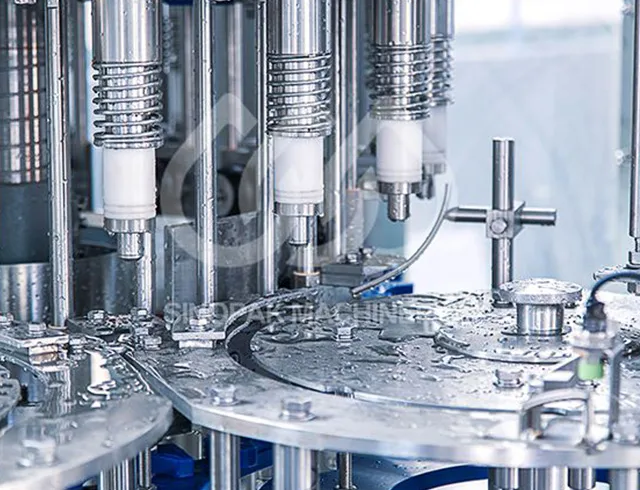
At the heart of the juice bottle filling process is the juice filling machine. After quality checks, processed juice flows into the filler, where it is accurately dispensed into bottles.
Modern filling machines are designed to meet different production needs:
- Filling accuracy ensures each bottle meets volume requirements, reducing product waste.
- High-speed operation supports large-scale production without sacrificing consistency.
- Hygienic design minimizes contamination risks and simplifies cleaning procedures.
- Automation and control systems allow operators to monitor parameters such as fill level, speed, and pressure in real time.
Whether used as a standalone unit or part of a complete juice bottling line, a reliable filling machine directly affects productivity and product quality.
7. Capping and Sealing
Immediately after filling, bottles move to the capping station. Secure sealing is essential to maintain freshness and prevent leakage during storage and transportation. Many juice filling machines are integrated with automatic capping systems, ensuring smooth operation without manual handling.
Consistent capping also reduces the risk of product returns and supports compliance with food safety standards.
8. Labeling and Date Coding
Once sealed, bottles proceed to labeling. Automatic labeling machines apply product labels accurately, providing brand information, ingredients, and regulatory details. Date printers or coding systems may also be added to mark production and expiration dates.
This step completes the visual identity of the product and prepares it for market distribution.
9. Quality Control and Inspection
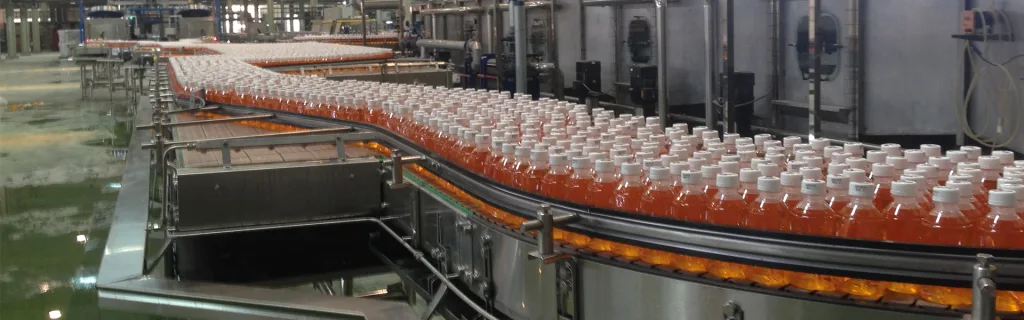
Before packaging, finished bottles typically pass through inspection systems. These checks confirm fill levels, cap integrity, and label placement. Identifying defects early helps reduce waste and maintain brand reputation.
A stable filling process supported by a high-quality liquid filling machine reduces the likelihood of inspection failures.
10. Packaging, Storage, and Distribution
Finally, bottles are packed into cartons or shrink-wrapped for transport. Automated packing systems can be integrated into the production line to improve efficiency. Finished products are then stored under appropriate conditions until shipment.
At this stage, the entire juice bottle filling process comes together, delivering a consistent and market-ready product.
Why Filling Equipment Matters in Juice Production
Throughout the process, the filling machine plays a decisive role. From handling different juice types to maintaining hygiene and speed, choosing the right juice filling machine helps manufacturers reduce downtime, control costs, and meet market demand.
For growing juice brands and established producers alike, investing in reliable filling equipment is a key step toward long-term success.
Conclusion
In summary, the juice bottle filling process is a structured sequence of preparation, processing, sterilization, filling, and packaging. Each step is closely connected, and performance at one stage directly affects the next. At the center of this system, the juice filling machine ensures accuracy, efficiency, and product safety.
For juice manufacturers planning new production lines or upgrading existing ones, working with an experienced equipment partner can simplify decision-making and improve operational results.
SinoPAK Machinery provides professional juice filling machines and complete juice bottling solutions designed to meet different production capacities and product requirements. By combining proven technology with practical industry experience, SinoPAK Machinery helps manufacturers build efficient, reliable, and scalable juice production lines.
