

 Français
  Español
  Português
  العربية
 Filling equipment plays a crucial role in various industries, particularly in manufacturing, packaging, and food processing. These machines are designed to efficiently and accurately fill containers with specific quantities of product, whether it be liquid, powder, paste, or granular substances. Understanding the different types of filling equipment, how they work, and where they are used can help businesses choose the right equipment for their specific needs. In this article, we will explore the world of filling equipment, covering everything from their basic functions to advanced technological features.
1. Introduction to Filling Equipments
Filling equipment, also known as filling machines, are specialized devices used to fill containers with a predetermined quantity of a product. These machines are essential in various industries where precise, efficient, and high-speed filling processes are required. Whether it’s food and beverage, pharmaceuticals, cosmetics, or chemicals, filling equipment ensures that products are consistently packaged according to specific standards.
Why Filling Equipment Is Important:
- Efficiency: Filling machines significantly increase the speed of the packaging process, allowing manufacturers to produce large volumes of product in a shorter time.
- Accuracy: These machines are designed to dispense precise quantities, reducing product wastage and ensuring consistency in packaging.
- Versatility: Filling equipment can handle a wide range of products, from thin liquids like water to viscous substances like creams or gels.
2. Types of Filling Equipments
There are various types of filling equipment available, each designed to handle specific types of products and packaging requirements. The main categories include liquid filling machines, powder filling machines, paste filling machines, and granular filling machines. Below, we’ll explore each type in more detail.
2.1 Liquid Filling Machines
Liquid filling machines are used to fill containers with liquid products, such as beverages, oils, and chemicals. These machines are further categorized based on the filling method they use:
Gravity Fillers:
Gravity fillers use the force of gravity to fill containers with liquids. The liquid flows from a reservoir into the container through a nozzle. This method is ideal for free-flowing, non-viscous liquids such as water, juice, or wine.
Pressure Fillers:
Pressure fillers use pressurized air or gas to push the liquid into the container. This method is suitable for filling carbonated beverages like soda or beer, where maintaining carbonation during the filling process is crucial.
Vacuum Fillers:
Vacuum fillers remove air from the container before filling it with liquid, creating a vacuum seal. This method is often used for filling liquids that need to be preserved, such as wines or spirits.
Pump Fillers:
Pump fillers use a pump mechanism to move liquid into containers. They are versatile and can handle both thin and thick liquids, making them suitable for products like sauces, oils, and syrups.
2.2 Powder Filling Machines
Powder filling machines are designed to fill containers with dry, powdered products, such as flour, spices, or pharmaceuticals. These machines ensure that powders are dispensed accurately and efficiently, preventing dusting and product loss.
Volumetric Fillers:
Volumetric fillers measure and dispense powders based on volume rather than weight. They are suitable for products where precise weight is less critical, such as certain food powders or non-critical pharmaceutical powders.
Auger Fillers:
Auger fillers use a rotating screw (auger) to move powder into containers. This method is highly accurate and is often used for filling products like protein powders, ground coffee, or powdered chemicals.
Vibratory Fillers:
Vibratory fillers use vibration to move powder into containers. This method is particularly effective for fine powders that are difficult to handle, such as talcum powder or cosmetic powders.
2.3 Paste Filling Machines
Paste filling machines are designed for products with a thicker, more viscous consistency, such as creams, gels, and sauces. These machines need to be robust and capable of handling the thicker texture of the product.
Piston Fillers:
Piston fillers use a piston mechanism to draw paste into a chamber and then push it into the container. This method is highly accurate and is ideal for thick products like peanut butter, honey, or shampoo.
Peristaltic Fillers:
Peristaltic fillers use a peristaltic pump to move paste through flexible tubing and into the container. This method is gentle on the product and is often used for pharmaceuticals and cosmetics where product integrity is essential.
Servo-Driven Fillers:
Servo-driven fillers use a servo motor to control the filling process, allowing for precise control over the volume and speed of filling. This technology is ideal for filling high-value or sensitive products like luxury creams or pharmaceutical ointments.
2.4 Granular Filling Machines
Granular filling machines are designed for filling containers with granular products, such as rice, sugar, or fertilizers. These machines are built to handle the free-flowing nature of granular materials and ensure consistent filling.
Net Weigh Fillers:
Net weigh fillers measure and dispense granules based on weight. This method is highly accurate and is often used for products sold by weight, such as grains, nuts, or chemicals.
Cup Fillers:
Cup fillers use a pre-measured cup to dispense a specific volume of granules into containers. This method is efficient and suitable for products where volume is more important than weight, such as dry snacks or pet food.
Vibratory Feeders:
Vibratory feeders use vibration to move granules into containers. This method is effective for small, irregularly shaped granules, such as seeds or small candies.
3. Working Principles of Filling Equipments
Understanding the working principles of filling equipment can help businesses choose the right machine for their specific needs. While the operation may vary depending on the type of filling machine, the basic principles remain consistent.
3.1 Automatic vs. Semi-Automatic Filling Machines
Automatic Filling Machines:
Automatic filling machines are fully automated and can perform the filling process without human intervention. These machines are ideal for high-volume production lines where speed and efficiency are critical. Automatic machines typically include features like bottle feeding, filling, capping, and labeling, all in one integrated system.
Semi-Automatic Filling Machines:
Semi-automatic filling machines require some level of human intervention, such as placing containers under the filling nozzle or starting the filling process. These machines are suitable for small to medium-sized production runs and offer flexibility for different container sizes and product types.
3.2 Key Components of Filling Machines
Hopper:
The hopper is a container that holds the product before it is dispensed into the individual containers. It is typically located at the top of the machine and feeds the product into the filling mechanism.
Filling Nozzles:
Filling nozzles are the parts of the machine that dispense the product into the containers. The design and size of the nozzle will vary depending on the product being filled and the type of container used.
Control System:
The control system manages the filling process, including the amount of product dispensed, the speed of filling, and any additional features such as capping or labeling. Advanced machines often feature digital control panels that allow operators to adjust settings easily.
Conveyor System:
In automatic filling machines, the conveyor system moves containers through the different stages of the filling process. This includes positioning the containers under the filling nozzles, moving them to the capping station, and finally to the labeling or packaging area.
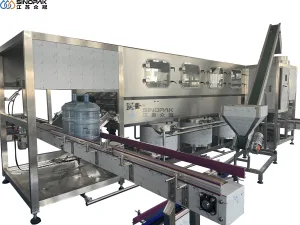
5 gallon filiing machine
4. Applications of Filling Equipments
Filling equipment is used across a wide range of industries, each with its own specific requirements. Below are some of the most common applications of filling machines.
4.1 Food and Beverage Industry
The food and beverage industry relies heavily on filling equipment for the packaging of liquids, pastes, and granular products. Common applications include filling bottles with water, juice, or soft drinks; filling jars with sauces, jams, or spreads; and filling bags with rice, grains, or snacks.
Hygiene and Safety:
In the food and beverage industry, hygiene and safety are of utmost importance. Filling machines used in this sector must be made from food-grade materials and be easy to clean to prevent contamination. Some machines also include features such as CIP (Clean-In-Place) systems, which allow for automated cleaning without disassembling the machine.
4.2 Pharmaceutical Industry
In the pharmaceutical industry, precision and accuracy are critical. Filling equipment is used to fill containers with liquid medicines, tablets, powders, and creams. These machines must meet stringent regulations and standards to ensure the safety and efficacy of the products.
Sterility:
Pharmaceutical filling machines are often designed to operate in sterile environments to prevent contamination of the products. This includes features such as HEPA filters, laminar flow hoods, and isolators that protect the product from airborne contaminants.
4.3 Cosmetics Industry
The cosmetics industry uses filling equipment to package a wide variety of products, including creams, lotions, gels, and powders. These products often require precise filling to ensure consistent quality and appearance.
Viscosity Handling:
Cosmetic products can vary widely in viscosity, from thin liquids like toners to thick creams and gels. Filling machines in this industry must be capable of handling these different viscosities without affecting the quality of the product.
4.4 Chemical Industry
The chemical industry requires filling machines for a range of products, including liquids, powders, and granules. These products can be hazardous, requiring filling equipment that is robust and designed to handle corrosive or flammable materials.
Safety Features:
Filling machines used in the chemical industry often include safety features such as explosion-proof components, corrosion-resistant materials, and integrated spill containment systems to protect workers and the environment.
5. Choosing the Right Filling Equipment
Choosing the right filling equipment depends on several factors, including the type of product being filled, the production volume, and the specific requirements of the industry. Here are some key considerations to keep in mind when selecting a filling machine.
5.1 Product Type and Viscosity
The type and viscosity of the product being filled will determine the type of filling machine needed. For example, thin liquids may require a gravity filler, while thick pastes may require a piston filler.
5.2 Container Type and Size
The type and size of the container will also influence the choice of filling equipment. Some machines are designed to handle specific container types, such as bottles, jars, or pouches, while others are more versatile and can handle multiple container types and sizes.
5.3 Production Volume
The production volume is a critical factor in determining whether an automatic or semi-automatic filling machine is needed. High-volume production lines will benefit from the speed and efficiency of an automatic machine, while smaller operations may prefer the flexibility of a semi-automatic machine.
5.4 Budget and Return on Investment
Budget is always a consideration when purchasing filling equipment. It’s important to balance the initial cost of the machine with the potential return on investment. Investing in a higher-quality machine may result in lower maintenance costs and increased production efficiency over time.
6. Conclusion
Filling equipment is a vital component in many manufacturing and packaging processes. Understanding the different types of filling machines, their working principles, and their applications can help businesses choose the right equipment for their needs. Whether you’re in the food and beverage, pharmaceutical, cosmetics, or chemical industry, selecting the right filling machine can improve efficiency, accuracy, and overall product quality.
By considering factors such as product type, container size, production volume, and budget, you can make an informed decision that meets your specific requirements. As technology continues to advance, filling equipment will become even more efficient and versatile, further enhancing the capabilities of industries worldwide.
