

 Français
  Español
  Português
  العربية
 In today’s fast-paced beverage production environment, manufacturers are under constant pressure to improve efficiency while maintaining product quality. As consumer preferences shift toward healthier beverages, such as fresh juices and functional drinks, beverage producers must meet increasing demand without sacrificing quality. One of the most effective ways to achieve this is by implementing integrated juice and beverage preparation systems that streamline the production process, enhance consistency, and reduce operational costs.
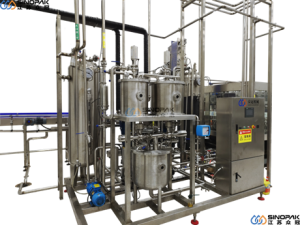
By integrating multiple production stages—from raw material handling, juice extraction, and mixing to pasteurization, homogenization, and filling—into a single automated system, manufacturers can optimize their workflows, reduce waste, and improve overall production efficiency.
The Role of Integrated Systems in Beverage Production
Juice and beverage production is a complex process involving several stages that need to work seamlessly together. Traditionally, these stages were separated and handled by different machines, each with its own operation and maintenance. This setup often led to inefficiencies, increased labor costs, and a greater chance for error. However, with the advancement of integrated systems, these processes can now be connected, allowing for a smooth, continuous flow from raw material handling to final product filling.
Integrated systems help by combining several production stages into one cohesive workflow. This integration reduces manual interventions, ensures better synchronization, and improves overall production efficiency. For example, systems can now handle mixing, pasteurization, and filling without the need for transferring products between machines. The result is faster processing times, reduced downtime, and lower labor costs, while still maintaining high product consistency and quality.

Key Features of Integrated Systems
Modern integrated systems come with several key features designed to improve both efficiency and product quality. These include:
- Automated Control Systems: Integrated systems utilize intelligent controls to monitor and adjust parameters such as temperature, pressure, and flow rate. This ensures that each step of the process is executed accurately, reducing the risk of human error and improving consistency.
- Energy Efficiency: Many systems incorporate energy-saving technologies, such as heat recovery from pasteurization units, which can be reused to pre-heat incoming ingredients. This minimizes energy consumption, making production more cost-effective.
- Real-Time Monitoring: Advanced sensors and control systems allow operators to monitor every aspect of the production process in real-time, enabling immediate adjustments if necessary and ensuring optimal product quality throughout.
- Modular Design: The modular nature of these systems allows manufacturers to scale production according to demand and easily add or remove components as needed. This flexibility is especially useful for businesses that produce multiple beverage types or need to switch between products quickly.
Impact on Production Efficiency
The benefits of integrating juice and beverage preparation systems are evident in the performance improvements seen by manufacturers. Below is a simple table comparing key production metrics before and after the adoption of an integrated system.
| Metric | Before Integration | After Integration |
| Production Time per Batch (hrs) | 6 | 4 |
| Daily Output (liters) | 8000 | 11000 |
| Energy Consumption (kWh/day) | 1200 | 900 |
| Labor Cost per Shift (USD) | 500 | 350 |
| Downtime per Week (hrs) | 8 | 3 |
As shown in the table, the adoption of integrated systems leads to significant improvements in production efficiency. For example, production time per batch is reduced by 2 hours, daily output increases by 3,000 liters, and energy consumption decreases by 25%. Additionally, labor costs and downtime have both been reduced, resulting in more efficient and cost-effective operations.
Real-World Applications and Success Stories
Several companies have already implemented integrated juice and beverage preparation systems with excellent results. For example, a juice manufacturer in Europe reduced downtime by 30% and increased output by 15% after integrating their production line. This system allowed them to monitor and control each step of the production process, which not only increased efficiency but also ensured consistent product quality across batches.
Similarly, a beverage producer in North America, specializing in both juices and flavored waters, benefited from the flexibility of their integrated system. By enabling quick changeovers between different beverage types, they were able to reduce downtime by 40%, allowing them to meet varying consumer demands without sacrificing production speed.
Conclusion
As the beverage industry continues to evolve, manufacturers must find ways to increase efficiency while maintaining high-quality standards. Integrated juice and beverage preparation systems offer an effective solution to this challenge by streamlining production, improving product consistency, and reducing operational costs.
For beverage producers looking to enhance their production capabilities and ensure quality control, investing in an integrated system is a strategic move. These systems provide significant benefits in terms of both productivity and cost-effectiveness, allowing manufacturers to stay competitive in an ever-changing market.
Integrated juice and beverage preparation systems offer significant benefits in improving production efficiency and product consistency. SinoPak helps manufacturers optimize their operations, ensuring high-quality output and streamlined processes.
