

 Français
  Español
  Português
  العربية
 Introduction
In the competitive bottled water market, efficiency, hygiene, and precision are key to profitability. Whether you’re launching a new water brand or expanding your existing beverage factory, selecting the best water filling machine is one of the most critical decisions you’ll make.
A properly chosen system can increase productivity, ensure consistent quality, and reduce long-term operating costs. However, with so many options available — from semi-automatic units to fully integrated bottling equipment — finding the right fit for your production line requires a clear understanding of your goals and technical requirements.
This comprehensive guide explains everything you need to know about choosing the ideal water filling machine for your production setup, covering production capacity, bottle compatibility, automation levels, and quality standards.
1. Understanding the Function of a Water Filling Machine
A water filling machine is the core of any bottled water production line. It ensures each container is filled with the correct amount of purified water under hygienic and controlled conditions.
Modern systems combine multiple processes — bottle rinsing, filling, capping, and sometimes labeling — into a single integrated unit. This design minimizes manual labor, reduces contamination risks, and improves output consistency.
Typical Filling Line Workflow
Bottle Rinsing: Bottles are washed with purified water or air before filling.
Filling: Water is dispensed using volumetric, gravity, or pressure-based filling technology.
Capping: Bottles are sealed immediately to maintain product purity.
Labeling & Packaging: Optional modules complete the final presentation.
In short, the water filling machine defines the speed, hygiene, and quality level of your entire production line.
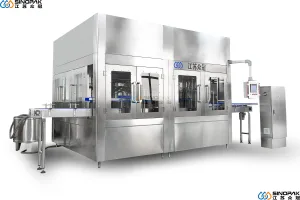
2. Determine Your Production Capacity
The first step in selecting the right bottling equipment is defining how much you plan to produce daily or hourly.
Low-Capacity (≤ 5,000 BPH)
Ideal for startups or small-scale operations. Compact or semi-automatic systems require minimal investment while providing stable output.
Medium-Capacity (5,000–15,000 BPH)
Suitable for growing beverage companies. These systems are fully automatic and integrate rinsing, filling, and capping into one continuous operation.
High-Capacity (15,000+ BPH)
Large factories and water brands benefit from high-speed rotary filling machines. These offer precision, reduced downtime, and advanced control systems for continuous 24/7 operation.
Pro Tip: Always plan for future expansion. Investing in a slightly higher-capacity system prevents costly upgrades as demand increases.
3. Match the Machine to Your Bottle Type
Not all water filling machines handle every bottle type equally well. The shape, material, and size of your containers determine the type of machinery you’ll need.
Common Bottle Materials
PET Bottles: Lightweight, durable, and cost-effective — ideal for still and sparkling water.
Glass Bottles: Preferred by premium brands for visual appeal and recyclability.
HDPE / PP Bottles: Suitable for large-volume packaging like 5L or 10L containers.
Bottle Sizes and Shapes
Ensure your system can accommodate different bottle formats, especially if you produce multiple SKUs. Modern machines support quick mold changes, minimizing downtime when switching between bottle types.
SinoPAK’s flexible water filling machines are designed to handle diverse bottle materials and dimensions, allowing seamless transitions across product ranges.
4. Evaluate the Automation Level
Automation significantly influences efficiency, accuracy, and labor requirements.
Semi-Automatic Machines
Affordable and ideal for small producers. Operators manually load and unload bottles, making them suitable for low-output applications.
Fully Automatic Machines
Integrate bottle feeding, rinsing, filling, and capping in one continuous system. They maximize throughput while minimizing human error.
Advanced Automation Features
PLC control and touchscreen interface
Servo-driven filling accuracy
Real-time monitoring and fault detection
Remote diagnostics and data tracking
SinoPAK’s automation technology enables manufacturers to optimize performance, reduce waste, and ensure consistency across every production cycle.
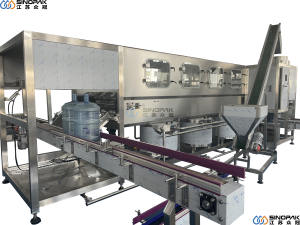
5. Prioritize Hygiene and Food Safety Standards
Water is a sensitive product that demands strict hygiene throughout production. Selecting a water filling machine with robust sanitation features ensures your product meets international quality standards.
Essential Hygiene Features
Food-grade 316L stainless steel contact parts
CIP (Clean-In-Place) and SIP (Sterilize-In-Place) systems
HEPA-filtered air in filling zones
Enclosed, no-drip filling valves
Smooth, crevice-free surfaces for easy cleaning
SinoPAK’s filling systems are designed following GMP and CE standards, ensuring safe and contamination-free bottling for drinking water producers worldwide.
6. Consider Energy Efficiency and Environmental Impact
Sustainability is increasingly important in beverage manufacturing. Efficient bottling equipment can lower operating costs while reducing environmental impact.
Energy-Saving Innovations
Optimized rinsing systems that use less water
High-efficiency motors and pumps
Low-air consumption for PET blowing units
Heat recovery and wastewater recycling designs
By adopting eco-friendly solutions, companies not only comply with global environmental policies but also enhance their brand image among environmentally conscious consumers.
7. Ensure Compatibility with the Rest of the Production Line
A water filling machine must work seamlessly within your overall production line. Integration ensures steady flow, synchronized timing, and consistent output.
Typical related systems include:
Water treatment equipment for filtration, sterilization, and mineral adjustment
Bottle blowing machines for PET bottle production
Labeling, shrink wrapping, and carton packaging systems
Conveyor and inspection systems for automation and quality assurance
SinoPAK provides turnkey beverage production lines — from raw water processing to final packaging — ensuring all equipment works together flawlessly.
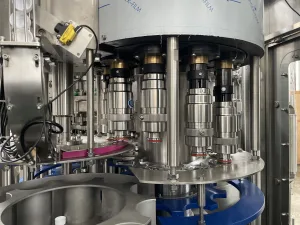
8. Compare Different Filling Technologies
There are several types of water filling systems, each with its own strengths.
Gravity Filling
Ideal for still water; relies on gravity for smooth and precise filling.
Pressure Filling
Used for carbonated water or beverages under pressure. Ensures consistent volume and foam control.
Volumetric Filling
Delivers extremely accurate fills regardless of bottle shape, often used for premium or flavored waters.
Choosing the correct technology ensures stability, accuracy, and reduced product waste during operation.
9. Factor in After-Sales Support and Technical Service
Purchasing a water filling machine is a long-term investment, and ongoing support is essential to protect that investment.
Look for Suppliers That Offer:
On-site installation and commissioning
Operator training and technical documentation
24/7 remote support
Spare parts availability and maintenance contracts
SinoPAK’s global service network ensures quick technical response and reliable long-term operation for clients across more than 50 countries.
10. Total Cost of Ownership (TCO) vs. Initial Price
When evaluating machinery, don’t focus only on the purchase price. Consider the total cost of ownership, which includes energy consumption, maintenance, spare parts, and downtime risks.
A high-quality water filling machine might cost more upfront but saves significantly in long-term reliability and productivity. SinoPAK’s machines are engineered for durability, delivering high ROI through stable operation and minimal maintenance.
11. Why SinoPAK Is a Trusted Partner for Global Beverage Producers
With years of expertise in beverage production technology, SinoPAK offers complete bottling solutions tailored to clients worldwide.
Our Main Products Include:
Can Filling and Packaging Machines
Blow Molding, Labeling, and Water Treatment Systems
Each machine is built with precision, using the latest automation and quality control systems to ensure smooth, hygienic, and efficient production.
From factory design to installation and after-sales support, SinoPAK provides turnkey beverage production lines that empower businesses to grow confidently.
Conclusion
Selecting the right water filling machine is not just about equipment — it’s about creating a sustainable, efficient, and profitable production system. By analyzing factors such as production capacity, bottle type, automation level, and supplier reliability, you can make an informed decision that ensures long-term success.
At SinoPAK, we understand the challenges beverage manufacturers face. Our mission is to deliver advanced bottling equipment and complete production solutions that help you meet global quality standards, maximize efficiency, and stay ahead in a competitive market.
Whether you’re producing bottled water, juice, or carbonated beverages, SinoPAK has the expertise and technology to make your production line smarter, faster, and more reliable.
