

 Français
  Español
  Português
  العربية
 Introduction: Why Labeling Machines Matter in Modern Production
In today’s competitive market, products need clear information and strong brand identity. This makes labeling an essential step in every packaging line. Labeling machines help companies apply labels quickly, accurately, and consistently, which is important for meeting industry regulations and improving product presentation. To choose the right labeling machine, it is important to understand how different systems work and what advantages they bring. With that in mind, this article explains the major types of labeling equipment and how to select the one that fits your operation.
Classification of Labeling Machines: How They Differ
To understand labeling machines better, it helps to look at how they are classified. Different features, automation levels, and labeling methods determine which system works best for each production line.
1. By Automation Level
Labeling machines can be manual, semi-automatic, or fully automatic. Manual systems suit small businesses or low-volume production. Semi-automatic machines reduce human error and increase speed for medium-volume operations. Fully automatic labeling machines are used in larger factories where producers need fast, consistent, and continuous output.
2. By Labeling Method
Labeling machines also differ by how labels are applied.
- Pressure-sensitive (self-adhesive) labeling machines apply labels with built-in adhesive backing.
- Hot melt glue labeling machines use hot glue to apply wrap-around labels, commonly used in the beverage industry.
- Wet glue labeling machines use cold glue and paper labels, often seen in glass bottle applications.
- Shrink sleeve labeling machines apply a plastic sleeve that shrinks with heat to fit tightly around containers.
Each method serves different materials, shapes, and branding requirements.
3. By Container Orientation
Another common classification is based on how containers move through the system.
- Vertical labeling machines are ideal for bottles and jars that stand upright.
- Horizontal labeling machines handle small round containers that cannot stand steadily, such as ampoules or small tubes.
4. By Machine Design: Inline vs. Rotary
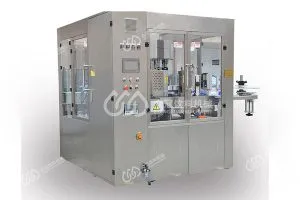
Inline systems move containers in a straight line, making them flexible and easy to integrate. Rotary labeling machines rotate containers around a carousel, allowing high-speed and high-precision application. The design difference directly affects speed, cost, and floor space.
Key Types of Labeling Machines and How They Work
To help users choose the right equipment, it is important to understand how each major labeling machine functions.
1. Pressure-Sensitive (Self-Adhesive) Labeling Machines
These machines are widely used because of their versatility. They apply ready-made adhesive labels to bottles, jars, cans, or boxes with high accuracy. Since no glue is required, the system is clean and easy to maintain. This type of labeling machine works well for cosmetics, food, and medical products.
2. Hot Melt Glue Labeling Machines
Hot melt glue labelers are common in beverage packaging. They apply a thin layer of hot glue to wrap labels quickly around containers. These machines offer fast operation and low material cost, which makes them suitable for high-volume beverage brands.
3. Wet Glue Labeling Machines
Wet glue labeling machines use paper labels and cold glue. They are ideal for glass bottles in industries such as beer, condiments, and specialty drinks. The system is stable, cost-effective, and well-suited for traditional label styles.
4. Shrink Sleeve Labeling Machines
In shrink sleeve labeling, a plastic tube is placed over the bottle and then heated to create a tight, smooth finish. This method provides 360-degree coverage, allowing brands to display graphics all around the bottle. Shrink sleeve labeling machines work well for beverages, personal care items, and irregular-shaped containers.
5. Wrap-Around Labeling Machines
These machines apply labels around the full circumference of round bottles. They are used for water bottles, juice bottles, and various pharmaceutical products where full-wrap branding is required.
Inline vs. Rotary Labeling Systems
After understanding the types of labeling machines, it is helpful to compare inline and rotary systems, as both designs are commonly used.
1. Working Principles
Inline labelers move containers along a straight conveyor. Rotary machines hold bottles in individual stations on a rotating carousel. These structural differences influence how fast and precise each machine can operate.
2. Speed & Throughput
Inline systems are suitable for low- or medium-speed production. Meanwhile, rotary labeling machines support high-speed operations and can handle thousands of bottles per hour, making them ideal for beverage manufacturers.
3. Accuracy & Stability
Rotary labeling offers higher accuracy because each bottle is fixed in place during labeling. Inline models provide good precision for standard products but are not as stable at very high speeds.
4. Flexibility & Changeover
Inline systems are easier to adjust for different bottle sizes and label types. Rotary systems offer excellent continuous production but require more time when changing formats.
5. Cost Considerations
Inline labelers have lower investment costs, making them suitable for growing businesses. Rotary systems require higher initial investment but deliver long-term value in high-volume operations.
Choosing the Right Labeling Machine
Selecting the right machine depends on several factors:
1. Production speed
Low-to-medium speed factories benefit from inline systems, while large beverage or food producers need rotary labeling machines.
2. Container type and material
For example, shrink sleeve labelers are best for irregular shapes, while wet glue machines fit glass bottles.
3. Label material and appearance
Paper labels, PVC sleeves, PET sleeves, and adhesive labels all need different equipment.
4. Flexibility and changeover frequency
Multiple SKUs require labeling machines that support quick adjustments.
5. Overall cost
This includes equipment investment, label cost, labor, and maintenance.
By reviewing these factors, companies can select labeling equipment that fits their long-term production goals.
Applications Across Industries
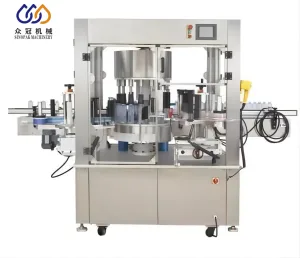
Labeling machines are used in many industries, including food and beverage, cosmetics, pharmaceuticals, household chemicals, and personal care products. Each industry requires different levels of speed, cleanliness, and precision. Understanding these needs helps manufacturers select the most suitable labeling solution.
Conclusion
Labeling machines play a key role in delivering accurate, clean, and attractive packaging. Whether choosing a pressure-sensitive system, a shrink sleeve labeling machine, a hot melt glue labeling machine, or a rotary labeler, companies must consider speed, container type, label design, and long-term production needs. With a clear understanding of these systems, businesses can make better decisions and improve overall efficiency and product quality.
If you are looking for reliable and efficient labeling machine solutions for your production line, SinoPAK Machinery offers professional equipment designed to meet the needs of modern beverage and packaging operations.
As a trusted Bottle Water Filling Machines manufacturer, SinoPAK provides complete support from equipment selection to installation and long-term service.
Contact SinoPAK Machinery today to find the right labeling solution for your operation.
