

 Français
  Español
  Português
  العربية
 1. Introduction
In today’s beverage market, consumers demand fresh taste, clean labels, and preservative-free juice products. For manufacturers, this creates a critical challenge:
How can you extend shelf life while maintaining natural flavor, nutrition, and safety — without adding chemical preservatives?
The answer lies in advanced aseptic filling technology.
As a professional juice beverage filling manufacturer, we have supplied aseptic filling solutions for juice, tea, dairy, and functional drinks to global customers. In this article, we explain the science behind aseptic filling, how it ensures effective juice preservation, and why it is becoming the preferred filling technology for modern beverage factories.
2. What Is Aseptic Filling?
Aseptic filling is a high-precision production process in which:
- The juice is sterilized separately.
- The packaging material (bottles, caps) is sterilized independently.
- Filling and sealing occur in a fully sterile environment.
Unlike traditional hot filling, aseptic filling does not rely on high-temperature sterilization after packaging. Instead, sterility is maintained throughout the entire process.
This approach allows manufacturers to preserve:
Natural flavor
Color integrity
Vitamin content
Nutritional value
All while achieving long shelf life without preservatives.
3. The Core Technology Behind Aseptic Filling Machines
Modern aseptic filling machines integrate several critical systems:
3.1 Ultra-High Temperature (UHT) Sterilization
Juice is rapidly heated to 135–150°C for a few seconds and then quickly cooled.
This process:
Destroys harmful microorganisms
Minimizes thermal damage
Protects taste and nutrients
Because exposure time is extremely short, product degradation is significantly reduced compared to conventional heating methods.
3.2 Sterile Air & Positive Pressure Isolation
The filling chamber operates under sterile air conditions with HEPA filtration.
Positive pressure prevents contaminated external air from entering the system.
This controlled environment is the foundation of effective juice preservation without additives.
3.3 Hydrogen Peroxide (H₂O₂) Bottle Sterilization
Before filling, bottles and caps are sterilized using controlled hydrogen peroxide vapor or mist.
Advanced aseptic filling machines include:
Residue detection systems
Automatic concentration control
Drying modules
This ensures compliance with international food safety standards.
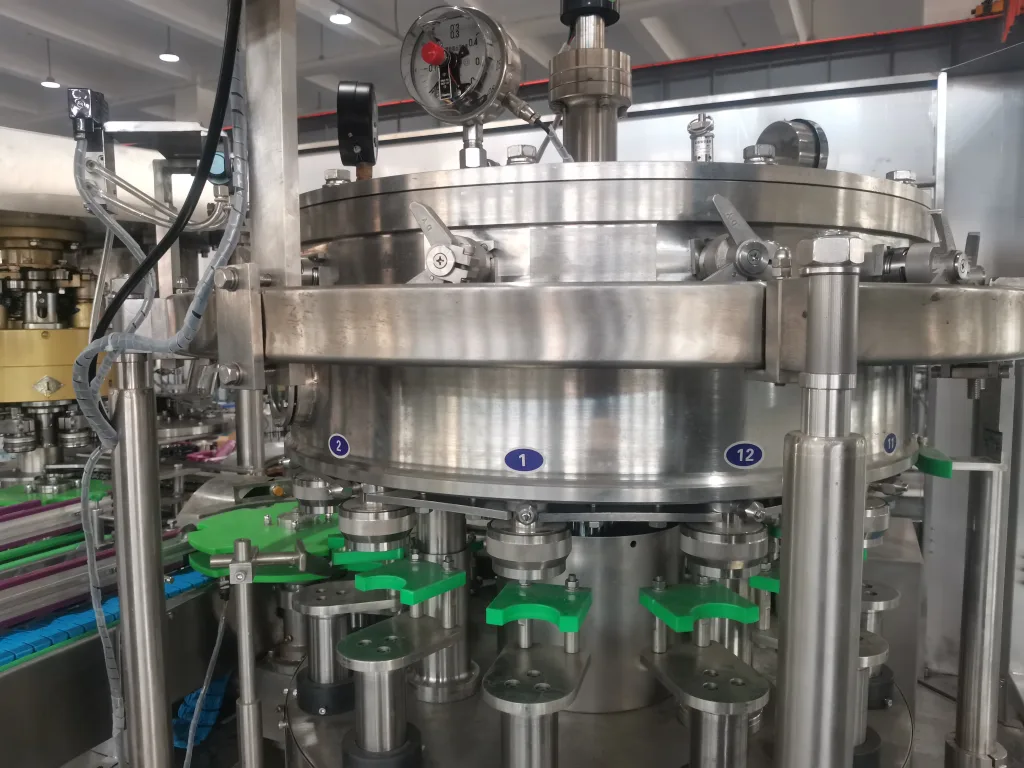
3.4 Fully Sealed Filling Valves
Precision-designed filling valves prevent micro-contamination during operation.
High-quality aseptic filling equipment includes:
CIP (Clean-in-Place) systems
SIP (Sterilization-in-Place) systems
Automated sealing inspection
These technologies ensure hygienic production and consistent quality output.
4. Why Aseptic Filling Is Critical for Juice Preservation
Consumers increasingly reject artificial preservatives. Retailers also demand longer shelf life for distribution efficiency.
Aseptic filling allows manufacturers to:
- Extend shelf life up to 6–12 months
- Maintain fresh taste without “cooked” flavor
- Protect sensitive vitamins (e.g., Vitamin C)
- Reduce energy consumption compared to hot filling
- Use lightweight PET bottles instead of heat-resistant packaging
From a production standpoint, this advanced filling technology improves brand positioning and supports premium product pricing.
5. Hot Filling vs. Aseptic Filling: What’s the Difference?
| Factor | Hot Filling | Aseptic Filling |
|---|---|---|
| Temperature | 85–95°C filling | Sterile environment filling |
| Flavor retention | Moderate | Excellent |
| Nutrient preservation | Partial | Superior |
| Packaging flexibility | Limited | High |
| Shelf life | Good | Excellent |
| Energy consumption | Higher | Optimized |
For high-value juice products, aseptic filling offers clear advantages.
6. Operational Benefits for Beverage Manufacturers
From our project experience supplying beverage filling lines worldwide, manufacturers choose aseptic systems for several reasons:
6.1 Higher Production Efficiency
Modern aseptic filling machines can reach high-speed output while maintaining sterility.
6.2 Reduced Product Waste
Precise control reduces spillage and contamination risks.
6.3 Stronger Market Competitiveness
“Preservative-free” labeling significantly improves consumer trust.
6.4 Long-Term Cost Optimization
Although initial investment is higher, reduced energy use and higher product value deliver strong ROI.
7. Compliance & International Standards
High-quality aseptic filling systems must comply with:
FDA food safety guidelines
CE certification
ISO quality management standards
For exporters targeting North America, Europe, and Southeast Asia, regulatory compliance is essential.
Choosing a reliable juice filling manufacturer ensures long-term operational stability and global market acceptance.
8. How to Choose the Right Aseptic Filling Machine
When evaluating suppliers, consider:
Engineering experience in beverage filling technology
In-house manufacturing capability
On-site commissioning support
After-sales spare parts availability
Customization for different bottle formats
As an experienced filling line manufacturer, we provide complete turnkey solutions including:
Water treatment systems
UHT sterilization units
Aseptic filling machines
Capping & labeling systems
Packaging and palletizing
9. Conclusion
Aseptic filling is no longer just a technological upgrade — it is a strategic investment in product quality, brand positioning, and long-term profitability.
By combining advanced aseptic filling technology, precision sterilization systems, and intelligent automation, juice manufacturers can achieve superior juice preservation without relying on artificial additives.
If you are planning to upgrade your beverage production line or explore preservative-free juice manufacturing, our engineering team is ready to provide tailored solutions based on your capacity and budget requirements.
10. Contact Us
Looking to improve your filling efficiency and product quality?
Contact us today to receive:
Technical consultation
Production capacity planning
Detailed quotation proposal
ROI analysis
