

 Français
  Español
  Português
  العربية
 In the competitive world of beverage manufacturing, efficiency, precision, and hygiene determine the success of a production line. Manufacturers are continuously seeking ways to enhance productivity while minimizing operating costs and floor space. One technology that has emerged as a game-changer in this area is the combiblock system — a fully integrated solution that combines multiple production functions into a single streamlined unit.
From water and soft drinks to juices and carbonated beverages, combiblock systems are redefining how modern bottling plants operate. This article explores what a combiblock system is, how it works, and why it has become an essential investment for beverage producers worldwide.
1. What Is a Combiblock System?
A combiblock system is an advanced integrated bottling solution that combines three key functions of beverage production — bottle blowing, filling, and capping — into one compact and automated unit.
Traditionally, these processes were carried out by separate machines connected through conveyors. Each step required its own equipment, operator supervision, and transfer points, which increased space requirements and the risk of contamination.
The combiblock concept eliminates these inefficiencies by connecting the blow molding, filling, and capping sections directly through a sterile, closed transfer system. As a result, bottles move seamlessly from one stage to another without leaving the controlled environment.
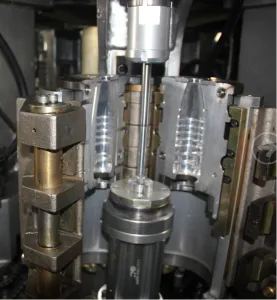
2. How Combiblock Systems Work
To understand why a combiblock system is so efficient, let’s break down how it operates:
- Blow Molding Unit:
PET preforms are heated and blown into bottles of the desired shape and size using precise air pressure control. - Filling Unit:
The freshly blown bottles are immediately filled with the beverage — water, juice, or carbonated drink — using advanced filling valves that ensure accuracy and minimal spillage. - Capping Unit:
Finally, the bottles move directly to the capping station where they are sealed hermetically. Since the bottles never leave the sterile environment, the risk of contamination is dramatically reduced.
This fully synchronized system is managed by a centralized PLC control that monitors temperature, pressure, filling volume, and production speed in real-time.
3. Key Benefits of a Combiblock System
Implementing a combiblock system in a beverage production line offers multiple operational and economic advantages:
3.1 Reduced Space Requirements
Since multiple machines are integrated into one system, combiblocks drastically reduce the footprint of the production line. Manufacturers can save up to 30–40% of floor space, making it ideal for facilities with limited room or those looking to expand capacity without constructing new buildings.
3.2 Improved Production Efficiency
Combiblock systems minimize downtime between processes. The absence of intermediate conveyors means faster bottle transfer, shorter cycle times, and increased throughput. A single line can handle tens of thousands of bottles per hour, depending on the configuration.
3.3 Energy and Cost Savings
Traditional bottling lines consume more energy due to multiple drives, motors, and transfer systems. The combiblock system optimizes energy usage by integrating motion control and air recovery systems, significantly reducing electricity and compressed air consumption. This results in lower operating costs and a faster return on investment (ROI).
3.4 Enhanced Hygiene and Product Safety
In beverage production, hygiene is critical. Every open transfer of bottles increases contamination risk. Because combiblock systems maintain a closed, sterile environment, the chances of microbial contamination are greatly reduced. This makes them particularly suitable for bottled water, juice, and sensitive beverages that require aseptic conditions.
3.5 Simplified Operation and Maintenance
Operating one integrated machine is easier than managing several standalone units. The unified control system allows operators to monitor all processes from a single interface. Maintenance is also simplified since there are fewer components and mechanical interfaces to inspect.
3.6 Flexible Production Capabilities
Modern combiblock systems are designed for flexibility — they can adapt to different bottle shapes, sizes, and materials (mainly PET). Some advanced systems also support quick changeovers, allowing manufacturers to switch between product types with minimal downtime.
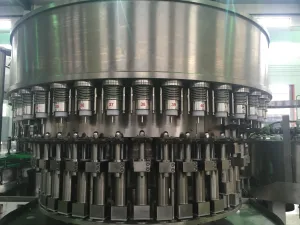
4. How Combiblock Systems Enhance Beverage Production
4.1 Integration for Seamless Operation
By combining blowing, filling, and capping, combiblock systems eliminate intermediate conveyors and accumulation tables. This integration reduces mechanical stress on bottles and prevents production bottlenecks.
4.2 Precision and Automation
Combiblocks use advanced servo control technology and sensors to monitor each stage of production. Automated feedback loops ensure filling accuracy, consistent bottle quality, and precise cap application — ensuring every bottle meets international quality standards.
4.3 Energy-Efficient Blowing and Filling
New-generation combiblocks use air recovery systems to reuse high-pressure air during bottle blowing. Additionally, optimized filling valves minimize beverage loss and foam, ensuring efficient liquid use.
4.4 Compact and Scalable Design
Whether you run a small bottling facility or a large-scale beverage factory, combiblock systems can be customized for your required production capacity — from a few thousand bottles per hour to over 36,000 BPH.
5. Application Scenarios for Combiblock Systems
Combiblock systems are suitable for a wide range of beverage production applications, including:
Bottled water production lines (still or mineral water)
Juice and flavored drink production
Carbonated soft drink bottling
Tea and functional beverage lines
Dairy-based or low-acid drinks (with aseptic combiblock configurations)
Because of their versatility and high hygiene levels, combiblock systems are also used in food, dairy, and pharmaceutical industries requiring sterile packaging conditions.
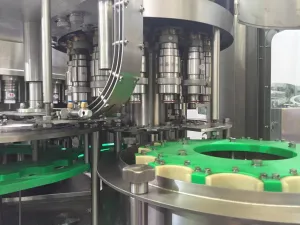
6. Comparing Combiblock Systems to Traditional Bottling Lines
| Feature | Traditional Line | Combiblock System |
|---|---|---|
| Footprint | Large (separate machines) | Compact (integrated design) |
| Bottle Transfer | Open conveyor (risk of contamination) | Closed sterile system |
| Energy Use | High | Low (air and energy recovery) |
| Automation Level | Medium | High (PLC-controlled) |
| Maintenance | Complex (many units) | Simplified (single system) |
| Cost Efficiency | Moderate | High ROI over time |
From this comparison, it’s clear that the combiblock system represents a smarter, more sustainable investment for long-term beverage production growth.
7. How to Choose the Right Combiblock System
When investing in a combiblock system, consider these key factors:
Production Capacity: Match system speed (BPH) to your market demand.
Bottle Specifications: Ensure compatibility with your bottle sizes and neck designs.
Beverage Type: Choose aseptic systems for juice, dairy, or sensitive beverages.
Automation Level: Evaluate how much automation you need for monitoring, cleaning, and quality control.
Supplier Reputation: Partner with experienced manufacturers who offer technical support, customization, and after-sales service.
8. Why Choose SinoPAK Combiblock Systems
At SinoPAK, we specialize in turnkey beverage production solutions tailored to the needs of global clients. Our combiblock systems are designed with the latest technology to ensure:
Compact structure with minimal floor space
High-speed, precise filling and capping performance
Intelligent control and easy operation
Energy efficiency and long service life
Customization for different beverages and bottle types
Whether you’re setting up a new bottling plant or upgrading an existing line, SinoPAK’s engineering team can design and deliver a complete integrated combiblock solution that maximizes your efficiency and production stability.
9. Final Thoughts
The global beverage industry is evolving rapidly, demanding smarter, cleaner, and more efficient production systems. The combiblock system stands at the forefront of this evolution — combining advanced automation, hygiene, and space-saving design into a single, high-performance unit.
For beverage manufacturers aiming to reduce operational costs, enhance productivity, and ensure consistent product quality, investing in a combiblock system is not just a technological upgrade — it’s a strategic move toward the future of beverage production.
