

 Français
  Español
  Português
  العربية
 Introduction
The bottled water market continues to expand as consumer demand for safe, clean, and convenient drinking water grows. Behind every successful bottled water brand is an efficient production line built with reliable bottling equipment. Among all components, the water filling machine plays a central role in determining the quality, efficiency, and profitability of your entire operation.
Choosing the right machine is not simply a matter of price. It involves evaluating multiple factors such as production capacity, bottle types, automation levels, and long-term performance. The right equipment will not only improve output but also reduce downtime, energy consumption, and maintenance costs — all essential for sustainable business growth.
This guide explains the key factors you should consider before purchasing a water filling machine, helping you make an informed decision that matches your production goals.
1. Why the Right Water Filling Machine Matters
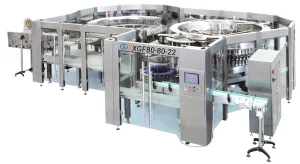
A water filling machine is more than just a piece of equipment — it’s the heart of your bottling line. The machine controls how water is dispensed, capped, and prepared for packaging. An efficient filling system ensures that every bottle meets precise fill levels and hygienic standards, resulting in a consistent, high-quality product.
A poorly chosen system, on the other hand, can cause frequent stoppages, inconsistent fill levels, and even contamination issues. Therefore, selecting the right machine is a strategic investment that directly impacts your brand reputation, operating cost, and market competitiveness.
2. Production Capacity: Matching Your Output Needs
One of the first considerations when choosing a water filling machine is production capacity — usually measured in bottles per hour (BPH). The machine you select must align with your current and future output goals.
Small-Scale Operations (≤ 5,000 BPH)
Perfect for startups and regional bottled water brands. Compact or semi-automatic machines are affordable and easy to operate, offering a practical starting point for small-scale production.
Medium-Scale Production (5,000–15,000 BPH)
Designed for expanding factories that need stable, continuous performance. Fully automatic rotary systems are popular at this scale, combining rinsing, filling, and capping into one integrated process.
Large-Scale Industrial Lines (15,000+ BPH)
High-speed rotary filling machines are essential for mass production. These systems feature servo control, intelligent filling valves, and PLC touch-screen interfaces for maximum efficiency and precision.
Expert Tip: When planning capacity, always account for potential business growth. Choosing a machine that supports slightly higher output can save you future upgrade costs.
3. Bottle Types and Material Compatibility
Every production line has specific bottle requirements, which influence the choice of filling machine. Your machine should be compatible with the material, shape, and volume of your containers.
Common Bottle Materials
PET Bottles: The most common for still or mineral water. They are lightweight, affordable, and suitable for high-speed lines.
Glass Bottles: Often used for premium brands. They require gentle handling systems and specialized conveyors.
HDPE and PP Bottles: Suitable for larger containers like 5L or 10L jugs, often used in home and office delivery markets.
Bottle Shapes and Sizes
If your company uses multiple bottle sizes, look for equipment with adjustable grippers and changeable molds. Modern bottling equipment supports quick changeovers, allowing flexibility without extensive downtime.
SinoPAK’s filling systems are designed with multi-format adaptability, ensuring seamless transitions between different bottle materials and sizes, all while maintaining hygiene and precision.
4. Automation Levels: Balancing Cost and Efficiency
The automation level determines how much of the production process is handled by the machine versus by operators.
Semi-Automatic Filling Machines
Ideal for startups and low-output operations. These require manual bottle loading and unloading but offer an affordable entry into automated production.
Fully Automatic Filling Machines
Fully integrated systems handle bottle rinsing, filling, and capping in one continuous operation. They significantly reduce labor costs and increase output consistency.
Advanced Automation Features
PLC & HMI Control Systems: Simplify operation and maintenance.
Servo-Driven Technology: Ensures accurate, stable filling performance.
Automatic Fault Detection: Identifies and corrects errors in real time.
Data Monitoring: Allows operators to track efficiency and adjust production parameters easily.
Automation not only improves efficiency but also enhances product quality and safety. SinoPAK’s fully automatic systems utilize intelligent control and precise mechanical design to deliver consistent results with minimal downtime.
5. Hygiene and Sanitation Standards
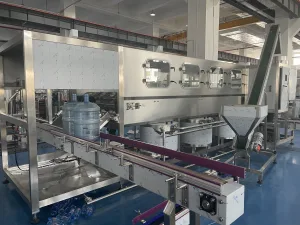
Bottled water must meet strict hygiene and safety requirements. Contamination can not only damage your brand but also result in costly recalls or penalties. Therefore, your water filling machine should be engineered for clean, sanitary operation.
Essential Hygiene Features
Contact parts made of 316L stainless steel
CIP (Clean-In-Place) and SIP (Sterilize-In-Place) systems
HEPA filtration in filling chambers
Enclosed no-drip valves and laminar flow designs
Smooth, crevice-free machine surfaces to prevent bacterial buildup
SinoPAK’s filling machines comply with international standards such as CE, ISO, and GMP, ensuring that every bottle filled meets global quality expectations.
6. Energy Efficiency and Sustainability
Sustainability has become a key factor for modern beverage manufacturers. The right bottling equipment can help reduce both environmental impact and operating costs.
Energy-Saving Technologies
Water-saving rinsing systems
Low-consumption compressors and pumps
High-efficiency drive motors
Heat and water recycling features
By adopting eco-friendly filling technology, manufacturers not only meet environmental regulations but also improve brand image and long-term profitability. SinoPAK focuses on developing energy-efficient systems that combine productivity with responsible resource management.
7. Integration with the Full Production Line
Your filling system doesn’t operate in isolation. It must work seamlessly with other units in your production line to maintain smooth workflow and consistent output.
A typical water bottling line includes:
Water treatment systems for purification and mineral adjustment
Bottle blowing machines for PET container production
Capping, labeling, and shrink packaging machines
Conveyor and inspection systems for product handling and quality control
SinoPAK offers turnkey production solutions, meaning all machines are designed to integrate perfectly — from raw water processing to finished packaging — for streamlined operation and reduced installation time.
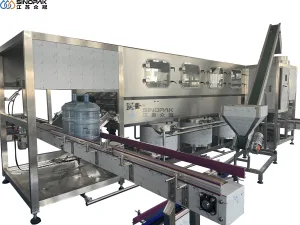
5 gallon filiing machine
8. Maintenance, Support, and After-Sales Service
Even the most advanced filling machine requires regular maintenance to perform optimally. Reliable technical support ensures minimal downtime and a longer equipment lifespan.
Look for Suppliers That Offer:
On-site installation and operator training
Preventive maintenance programs
Quick spare parts supply
24/7 technical support via remote or on-site assistance
SinoPAK maintains a professional global service network that supports customers before, during, and after installation, ensuring your investment delivers continuous returns.
9. Evaluating Cost vs. Value
When comparing machines, avoid focusing solely on the initial purchase price. Instead, evaluate the total cost of ownership (TCO), which includes:
Energy and water consumption
Maintenance costs
Spare parts and service fees
Downtime and production losses
Machine lifespan and scalability
Choosing a reliable supplier like SinoPAK ensures higher productivity, reduced operating costs, and strong long-term value — far beyond the initial purchase price.
10. Why Choose SinoPAK as Your Bottling Partner
As a professional manufacturer of beverage machinery, SinoPAK specializes in complete beverage bottling solutions. Our product range covers:
Can Filling and Labeling Machines
SinoPAK combines innovation, technology, and customer-focused service to deliver efficient, durable, and high-quality bottling equipment to clients worldwide. From project consultation to installation and maintenance, our team provides full technical support to help you build a successful production line.
Conclusion
Selecting the right water filling machine for your production line requires careful evaluation of capacity, bottle types, and automation levels. The right equipment not only enhances output efficiency but also ensures product hygiene, energy savings, and long-term stability.
At SinoPAK, we understand the complexities of beverage production and provide customized bottling equipment designed to meet your exact requirements. Whether you’re a startup entering the bottled water market or an established manufacturer seeking to upgrade your facility, SinoPAK is your trusted global partner for reliable and cost-effective filling solutions.
